


Last week I showed the result of my research into the careers of the 682 directors behind the top 1,250 grossing films of the past quarter century. We learned that almost exactly half had attended a film school.
This week I’m taking that one stage further, and looking at how the films from these two equally-sized cohorts differ.
Along the way we’re going to learn:
Do film school graduates make better films?
Are those films more successful financially?
Which of the top film schools produce the most successful graduates?
Do employers care if you went to film school?
Last week’s piece includes a breakdowns of the arguments both for and against attending film school so I won’t re-hash them here. But I did want to start out with a particularly interesting chart from a past research project.
A while back I did a survey with thecallsheet.co.uk in which quizzed UK film and TV employers. We asked them all manner of questions, including what qualifications they valued in new entrants.
Having a university degree scored pretty poorly (1.3 out of 5 for TV employers, and just 0.7 for film), but having a film degree scored even lower (0.8 for TV and 0.7 for film).
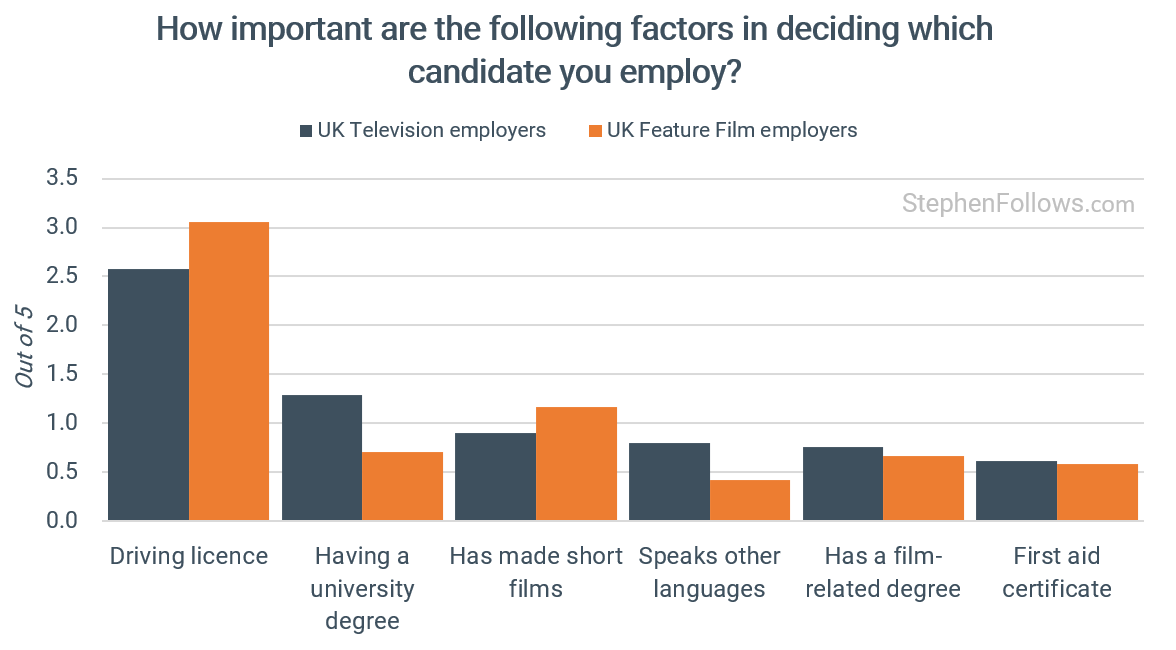
This shows that just having a film degree is not a passport into crew employment, and if anything, could be a hindrance (i.e. employers preferred non-film graduates over film graduates!).
So if it’s not going to help you when you first try to break in, maybe going to film school will be linked to better outcomes when you get to the top of the chain and are put in charge of directing a movie.
Let’s see what the data shows.
Do film school graduates make better films?
Art is subjective, but does film operates in a commercial marketplace and there are vast numbers of signals to indicate what different types of people thought of any particular movie.
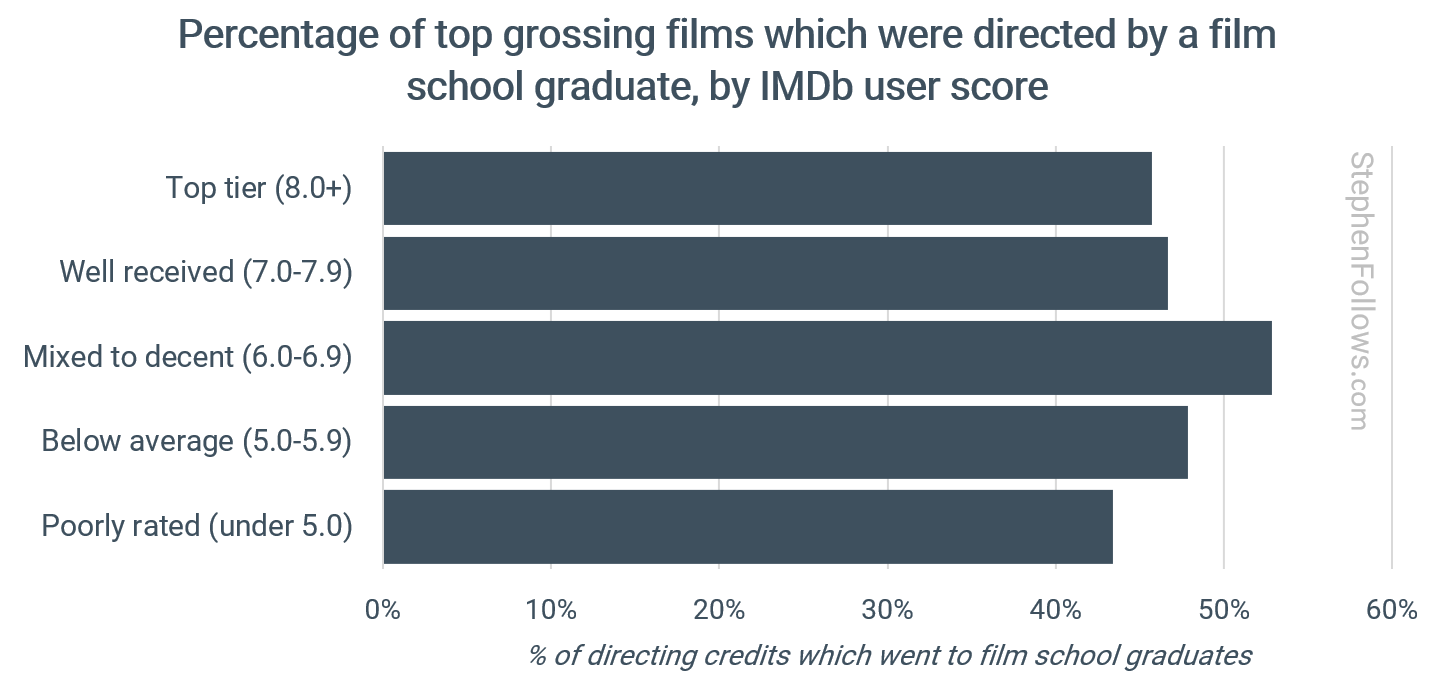
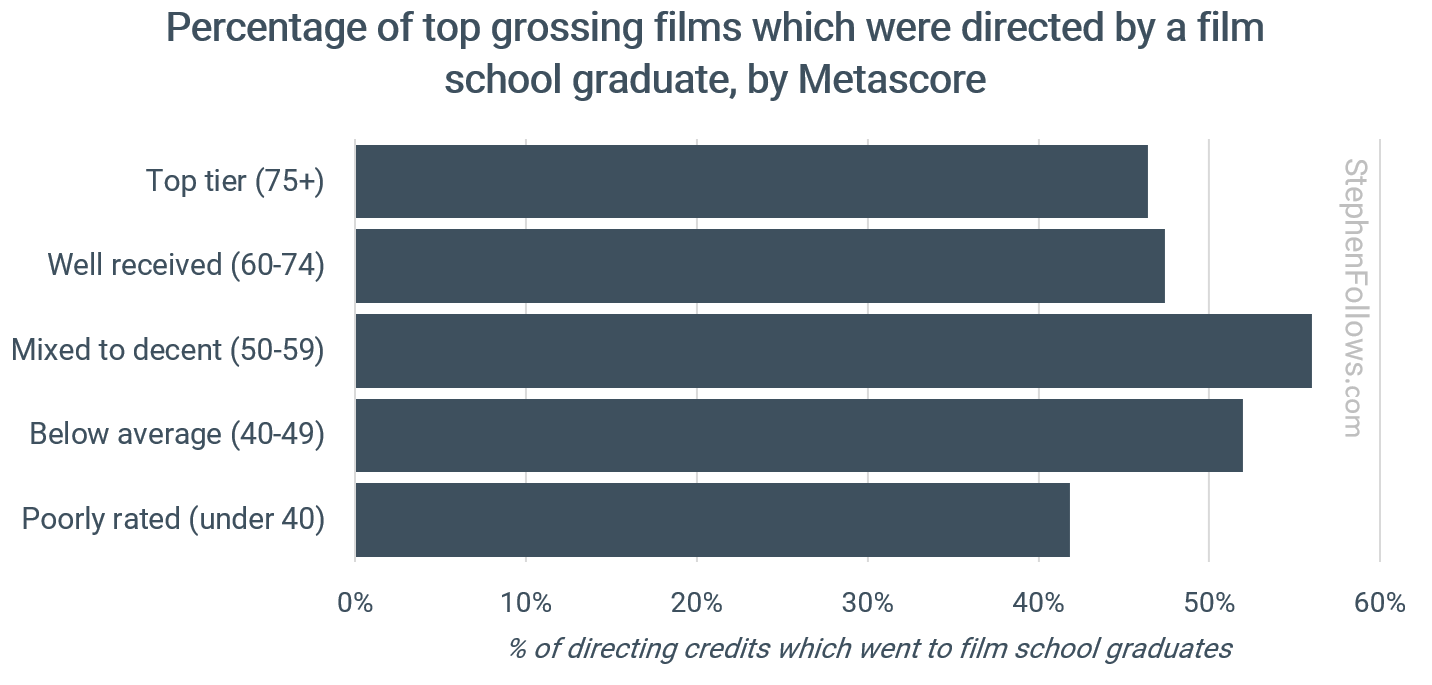
Among the signals we have for a film’s quality are its IMDb user score (out of 10, and representing film audiences), and the Metascore (which average critics, providing a score out of 100).
Film school graduates under index on the worst movies. Only 43.4% of the directors behind movies scoring under 5 on IMDb had attended film school. But it’s also true to say that they under-index among the very best film, making up 45.7% of films scoring over 8 out of 10.
So we might say that film school graduates making the ‘most mid’ films.
Let’s see what critics think.
It’s the same. So much so, that in writing this I had to keep checking I had the correct chart in each slot!
The very best and very worst films, according to critics, have the lowest representation of film school graduates.
There are some interesting differences between which film school the director went to, but before we look at that data let’s turn to money.
Are films from film school graduates more successful?
The modern film business is as much about money as it is art, so let’s turn to looking at rates of profitability.
We saw last week that film graduates are more likely to be given the reins of the biggest movies (i.e. the make up a majority of directors of films costing over $73 million and minority of those under).
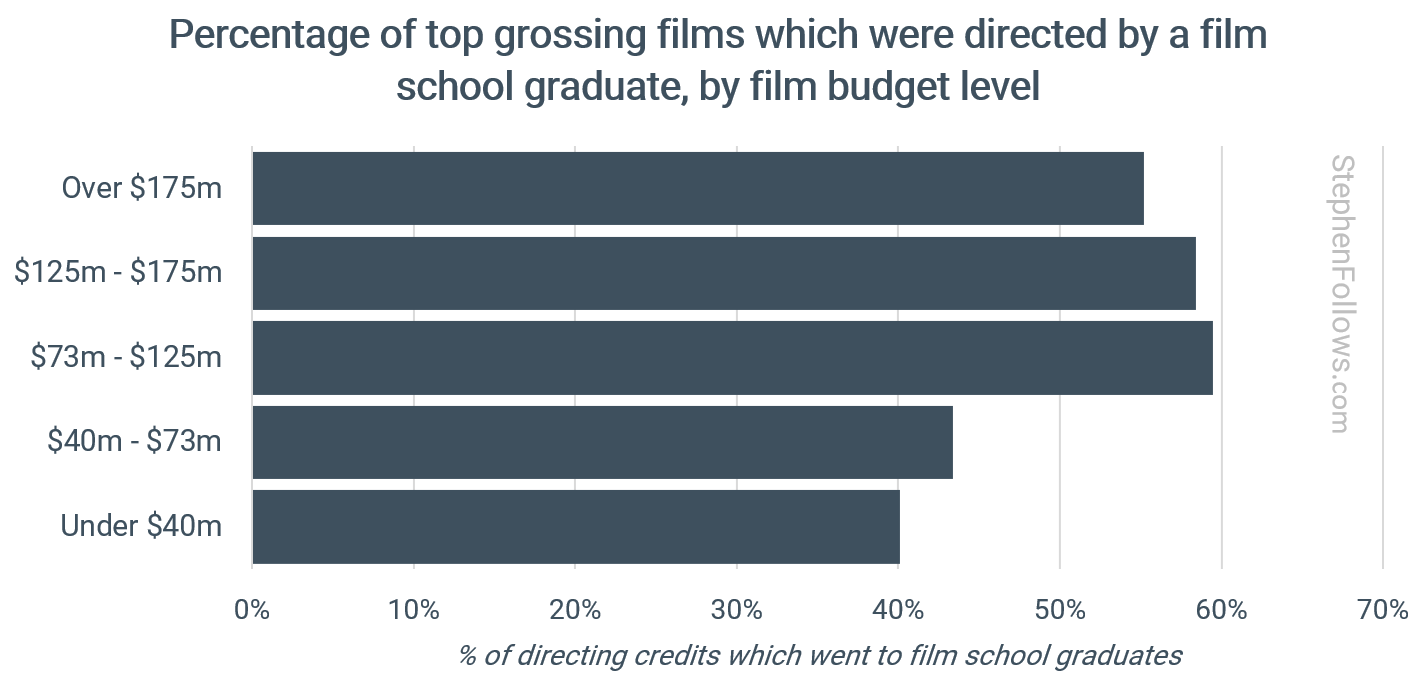
I estimated the profitability of each of those movies so we can get a sense of whether a formal film education is correlated with financial success.
