


Actors have long complained that they are now expected to maintain an active social media presence to bolster their chances of securing acting work. While the number of TikTok followers you have may be completely unconnected to your acting ability, it’s not unconnected to how hireable you seem to producers and casting directors.
However, alongside this regrettable trend, a parallel trend has emerged that flips it on its head. If an actor has a suitable amount of fame from their on-screen work, they can earn money directly from fans on Cameo.
Cameo allows actors to offer to make short, personalised videos for cash. These typically cover birthdays, anniversaries, pep talks, and more.
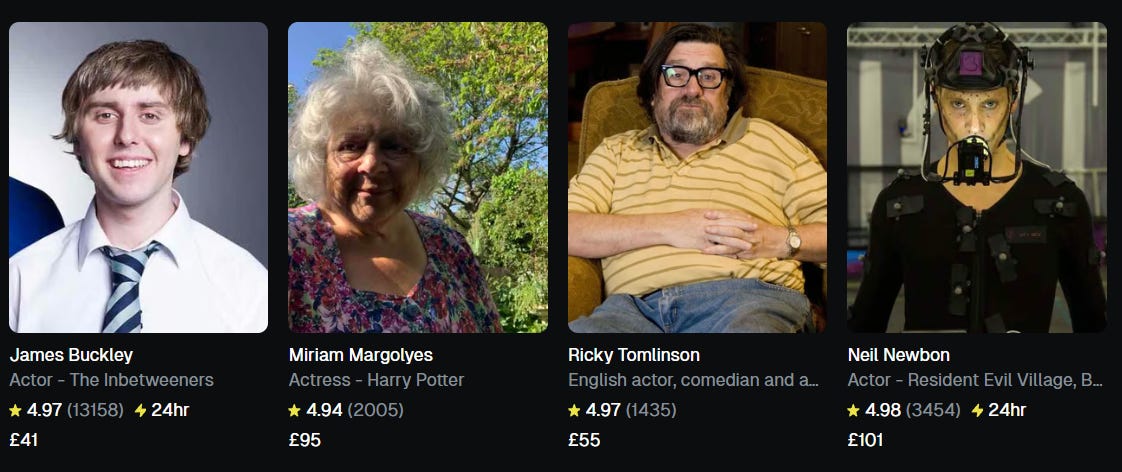
Actors get to make money while delighting their biggest fans and keep their name and face visible.
I have taken a deep dive into this world in order to answer a few questions:
How did Cameo become a platform used by film and TV actors?
What does the typical Cameo video look like?
What do fans complain about?
Are actors tiring of Cameo?
How much do actors charge for a Cameo?
Do more famous actors charge higher prices?
Do famous actors earn more money than less famous ones?
Who are some of Cameo’s top acting earners?
Who are the most liked actors on Cameo?
I will put the details of my methods and criteria at the end of the article for readability, but for now, know that today’s stats are around 4,777 Film and TV actors who have offered their services on Cameo.
1. How did Cameo become a platform used by film and TV actors?
Cameo launched in March 2017 with a simple pitch: fans could pay for a short, personalised video from a celebrity. The earliest names were mostly athletes because the founders had ties to the NFL, and the first public announcement came via a tweet from football player Cassius Marsh.
In the beginning, the platform leaned on what it called “the long tail of fame.” This meant reality TV stars, minor athletes, and actors with name recognition but limited current work. The business model worked best for people who had fans but not gatekeepers.
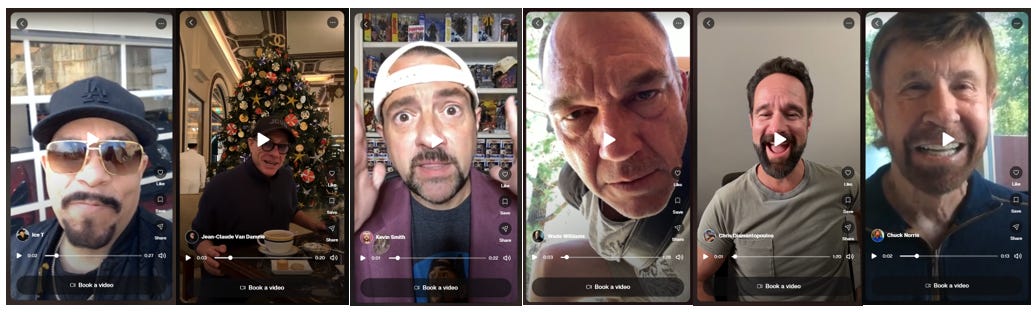
I tracked the dates of when the actors in my dataset joined the platform. It reveals two distinct waves:
April 2019 was the biggest month for new actors. Cameo opened a Los Angeles office in February 2019, and by the middle of the year, they announced they had raised over $65 million in venture capital and delivered 275,000 videos.
The second biggest month was exactly a year later, in April 2020. The start of the worldwide pandemic lockdown meant that film productions shut down, sets closed, and thousands of actors suddenly found themselves out of work. From the start of the year, the number of actors joining Cameo more than tripled.
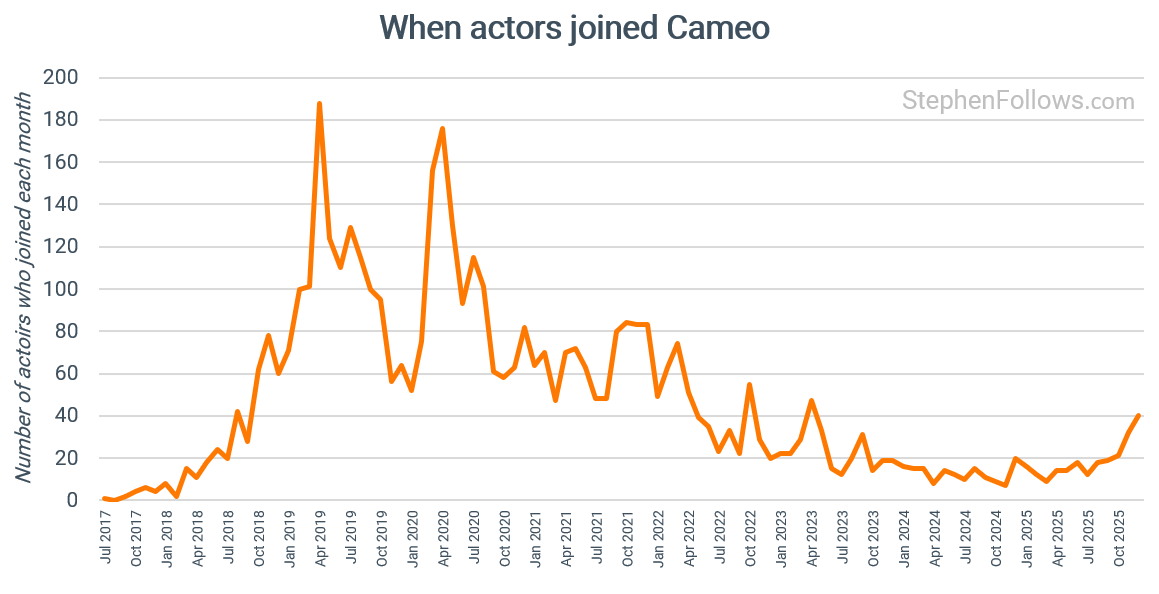
In the early months of the pandemic, not only were the actors in need of work but the rest of us were in the market for distraction. News of Cameo quickly spread, and the demand skyrocketed.
We can’t get granular figures on the number of videos delivered, but I found a useful proxy - reviews. After a video has been delivered, purchasers can leave a review in the form of a score out of five and a short text-based message. Many do this to show their gratitude and hopefully impress their newly minted celebrity bestie.
You can’t leave a review unless you’ve paid for a video, and each video can only have one review. So I tracked the stats on the 407,017 reviews left for the 4,777 actors in this dataset.
This reveals two things:
Lockdown was indeed boom time for actors on Cameo.
Outside of global emergencies, December is the biggest month, typically accounting for 14% of all videos ordered annually.
2. What does the typical Cameo video look like?
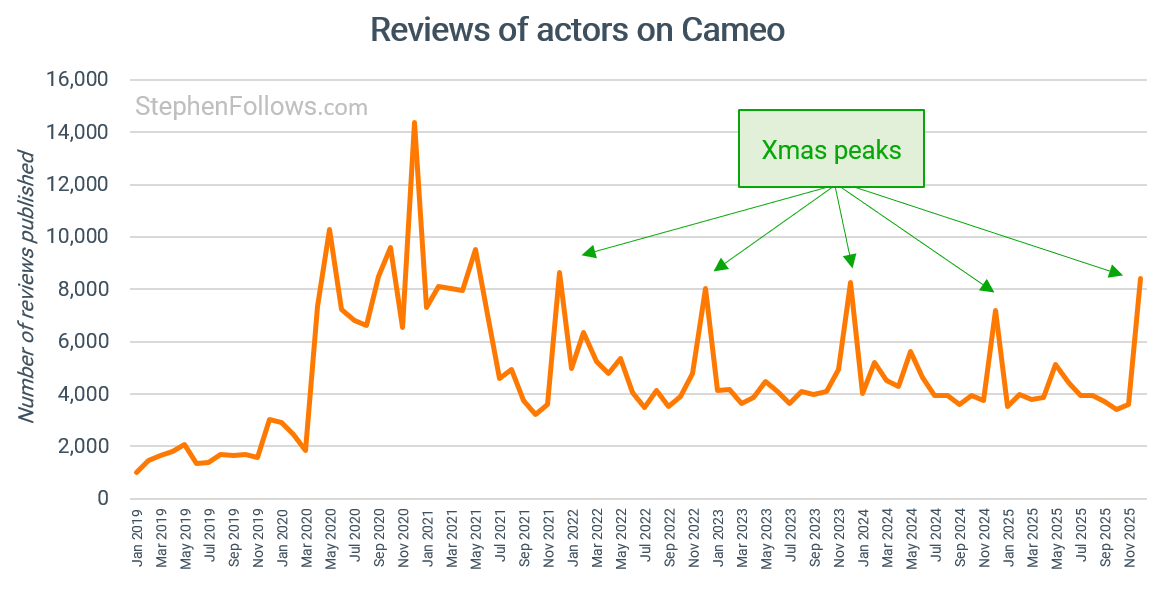
When the customer orders a video, they include a message to the actor (limited to 250 characters), specifying who it’s for, who it’s from, the occasion, and any other details about what they want the star to say.
This is enough information to make the video personalised, but it also limits the actor’s work. Without the information to improvise, most Cameo videos end up being between 30 and 90 seconds long. Only a small minority run longer than three minutes.
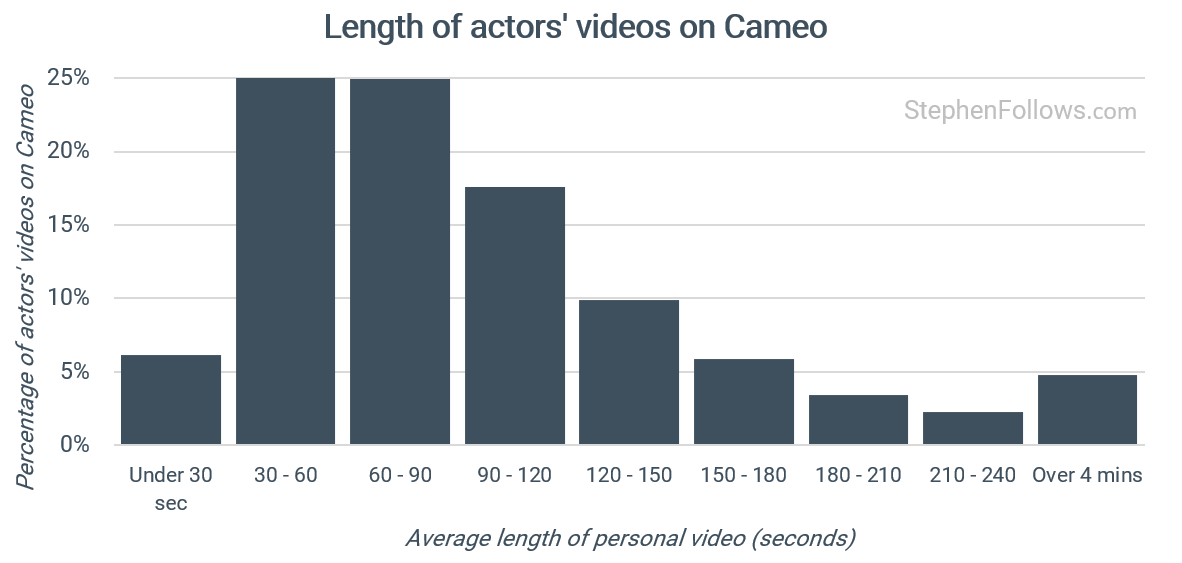
Here lies a slight tension. Actors would most likely favour making a short video (it allows them more time to deliver more in one sitting and reduces the risk of mistakes or causing offence), while the customer would probably want more (more face time with their idol and better value for money).
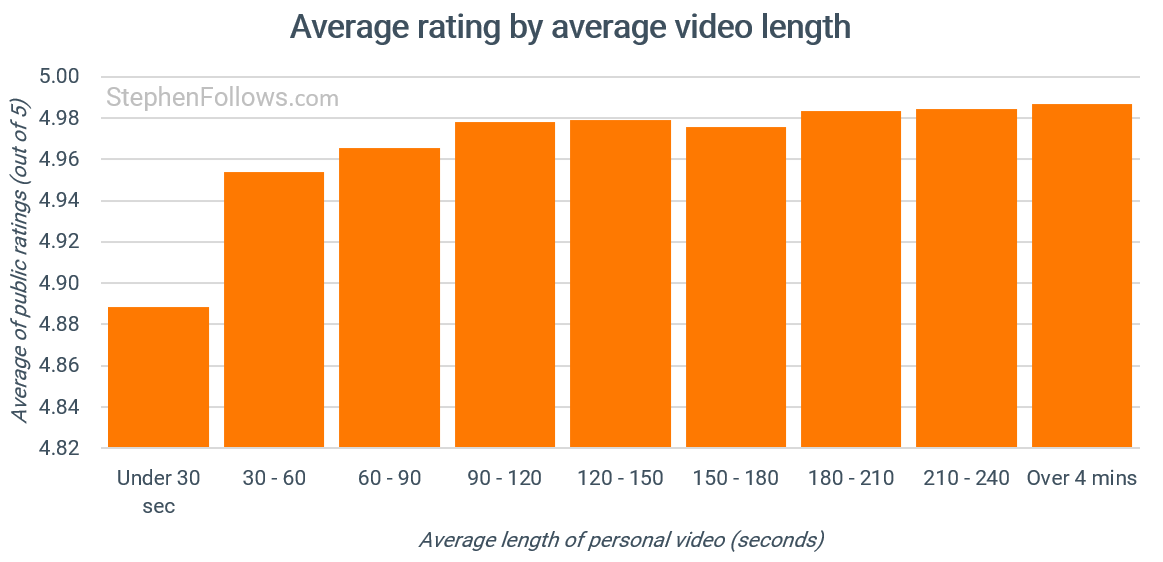
We can see this effect at work in the review data. Very short videos receive the lowest scores. Ratings rise steadily as videos get longer, peaking once videos pass the three-minute mark.
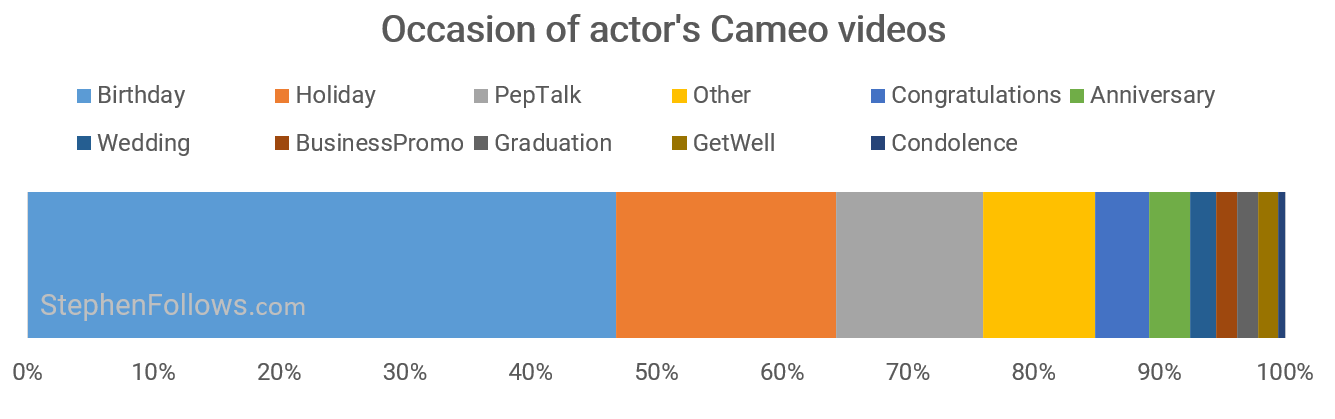
Almost half of the Cameos I tracked were commissioned to celebrate a birthday.
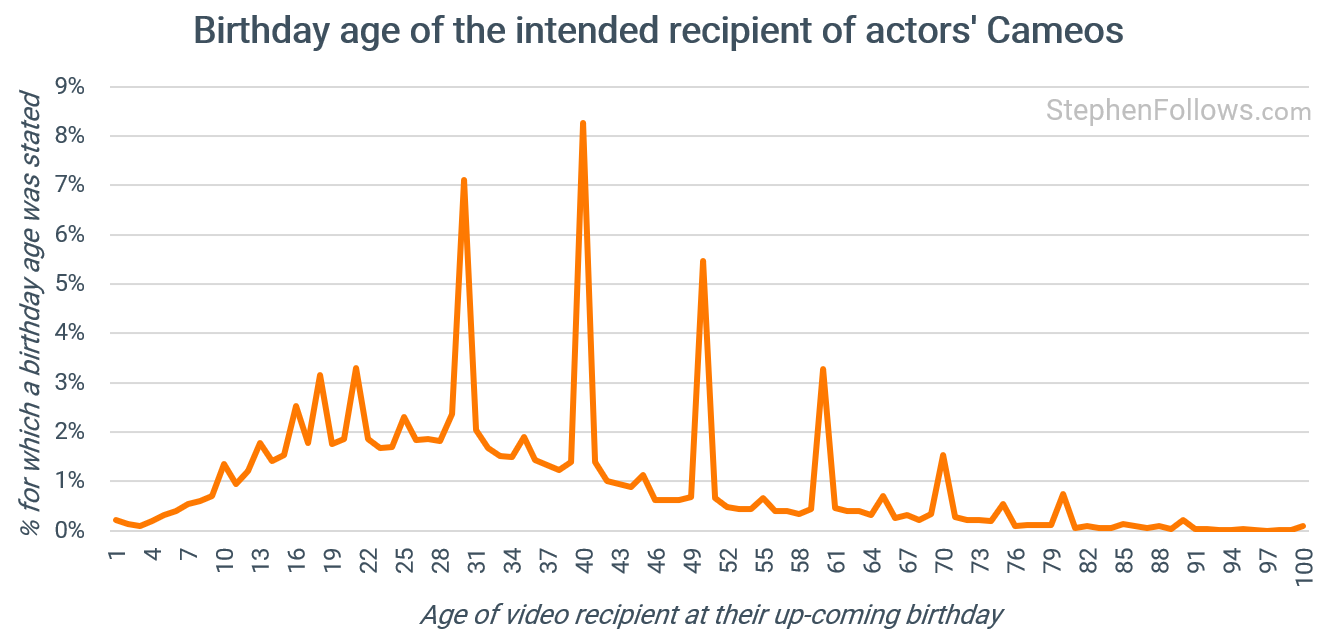
And that birthday was most often someone’s 40th. This makes sense when you consider the people who have disposable income for a $200 video message, and the nature of long-term fan bases.
3. What do fans complain about?
The sharp-eyed among you will have noted how high the average ratings are. In fact, 98.8% of reviews on Cameo are full five out of five. I guess this is a mix of actors successfully delivering on their promise and customers’ unwillingness to publicly criticise the actor you like so much that you just gave them a few hundred bucks to say your name.
The glowing reviews don’t help us learn much, but the handful of negative ones are quite revealing.
I focused on the 1,189 negative reviews that include text comments to understand why a very small minority of customers are left disappointed.
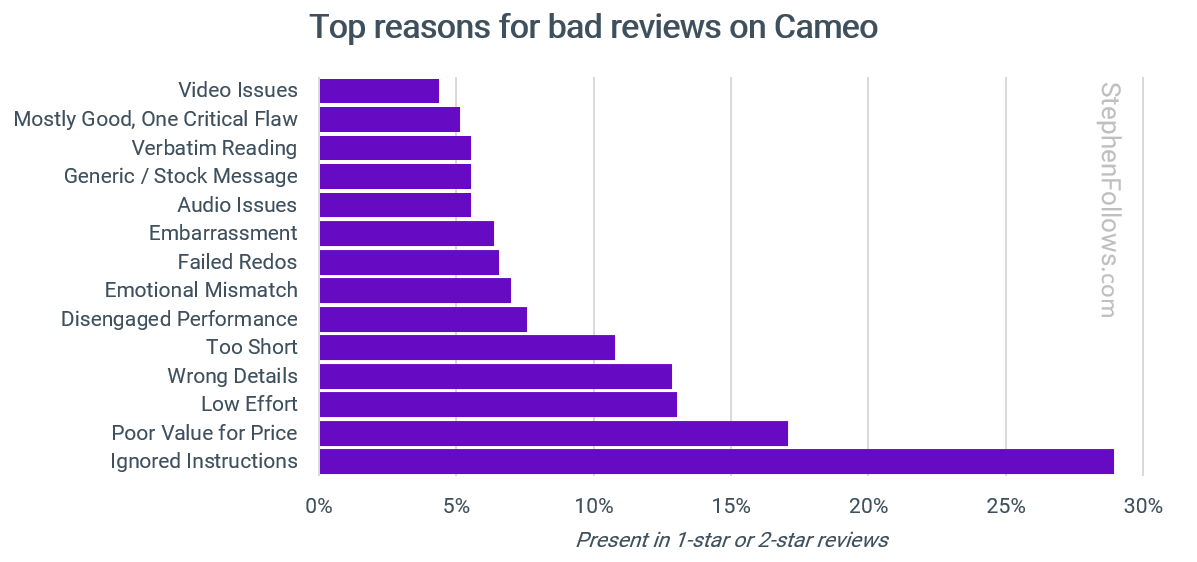
The biggest complaint will be one that directors might smile at, namely, that the actor ignored the script. 28.9% of such negative reviews were down to not following instructions. Other complaints included:
17.1% cited poor value for price
13.0% Low effort, such as being rushed, revealing minimal prep, “phoning it in”, or not retaking after a fluff.
12.9% pointed out that the actor said the wrong details
10.8% felt the video was too short, i.e., very brief or abrupt ending.
7.6% felt the actor delivered a disengaged performance, appearing bored/annoyed, distracted, or multitasking.
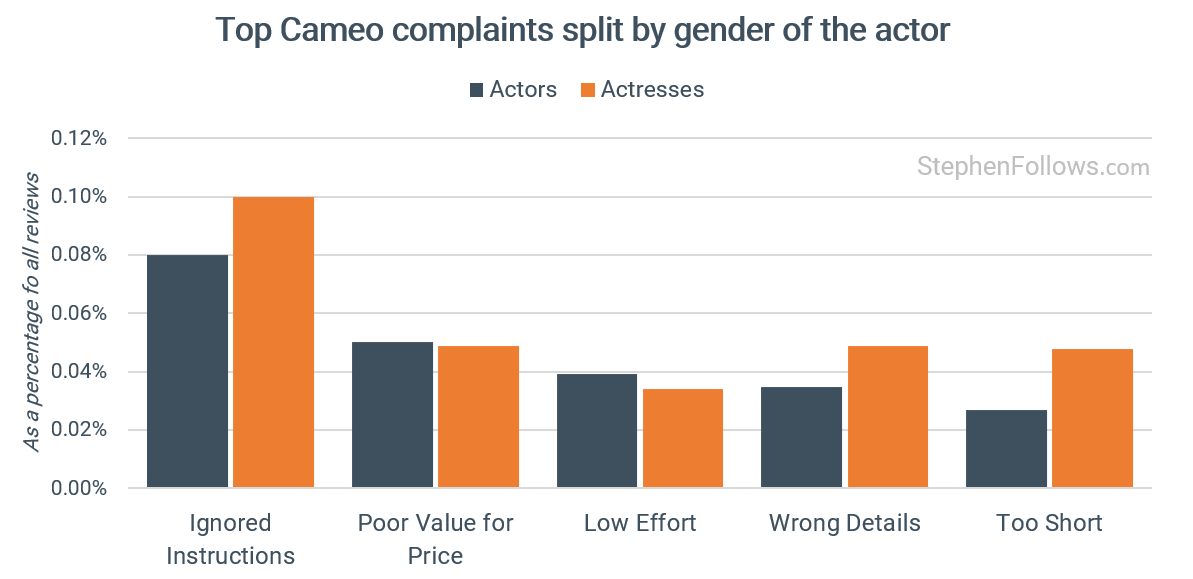
Female actors are more likely to be criticised for not following instructions, giving too little time, or including incorrect details. Male actors are more likely to be called low-effort.
4. Are actors tiring of Cameo?
In 2020, Cameo generated $100 million in gross revenue, but only a few years later looked to be in trouble. In May 2022, they laid off 25% of their employees, and the following year, defaulted on a $600,000 fine owed to the state of Texas for violating FTC endorsement rules.
Cameo’s valuation had previously hit $1 billion in a 2021 funding round, but is currently estimated at about 10% of that. (Plus, they briefly pinned their hopes on a Cameo NFT, currently worth 0.0001 ETH).
Despite these dire financial figures, the public side of actors on Cameo doesn’t seem all that bad.
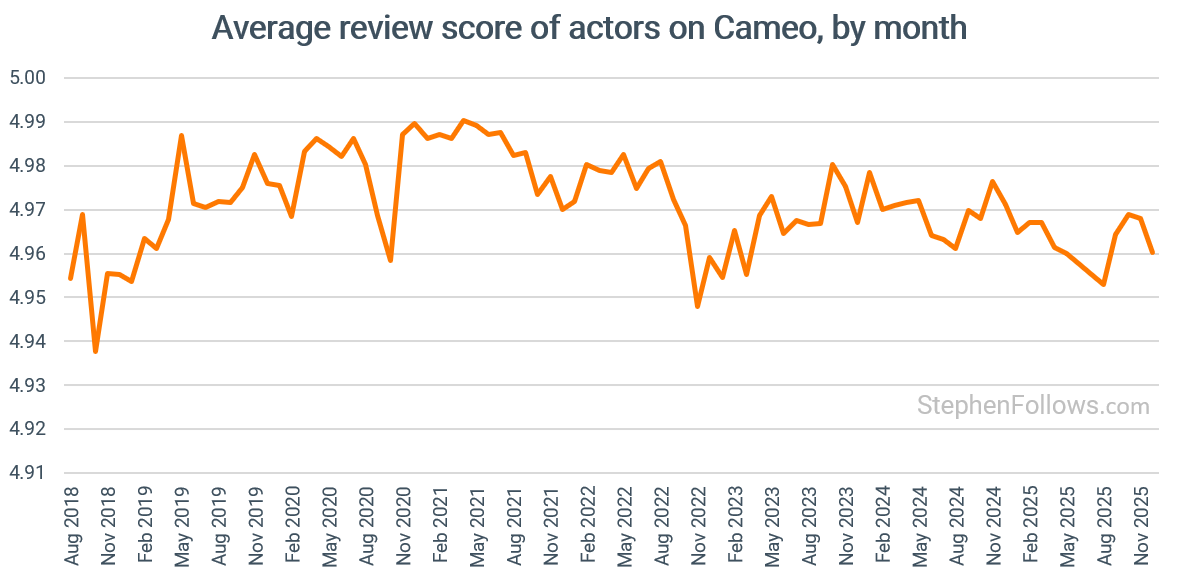
It’s true that the average rating for actors’ videos has fallen… but only slightly.
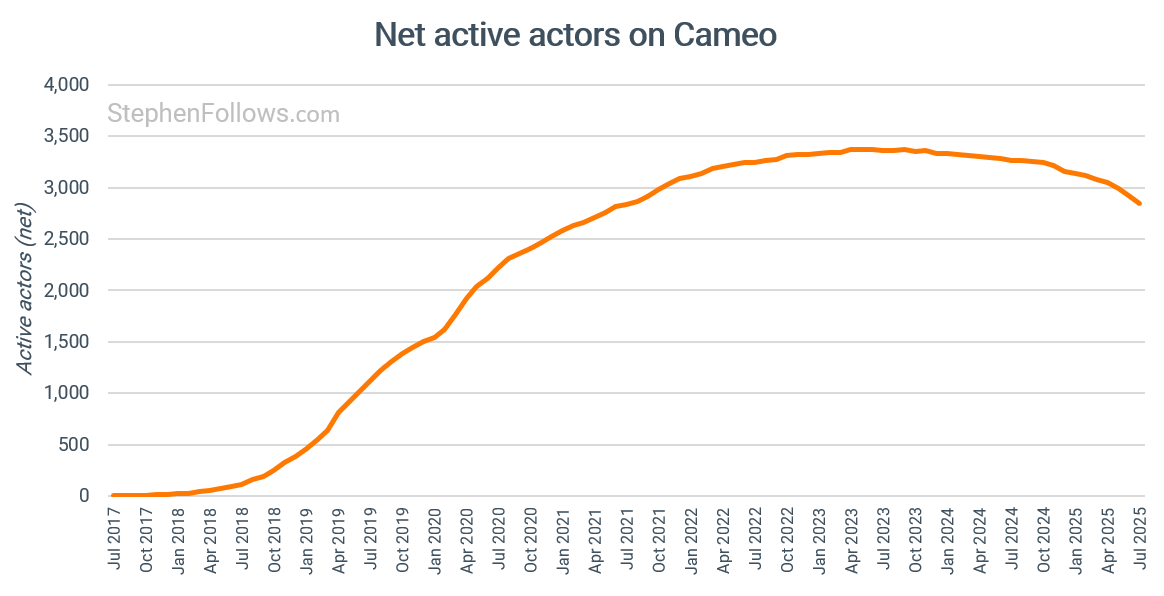
Also, the number of new actors joining has fallen… but that’s to be expected when a company moves from a growth phase to a normal business phase. I used the dates of actors’ join dates and the date of their most recently delivered video to calculate a rough ‘net active’ count.
Net active actors rose quickly through 2019 and 2020, levelled off in 2022, and have declined slightly since mid-2023. But it’s hardly an exodus.
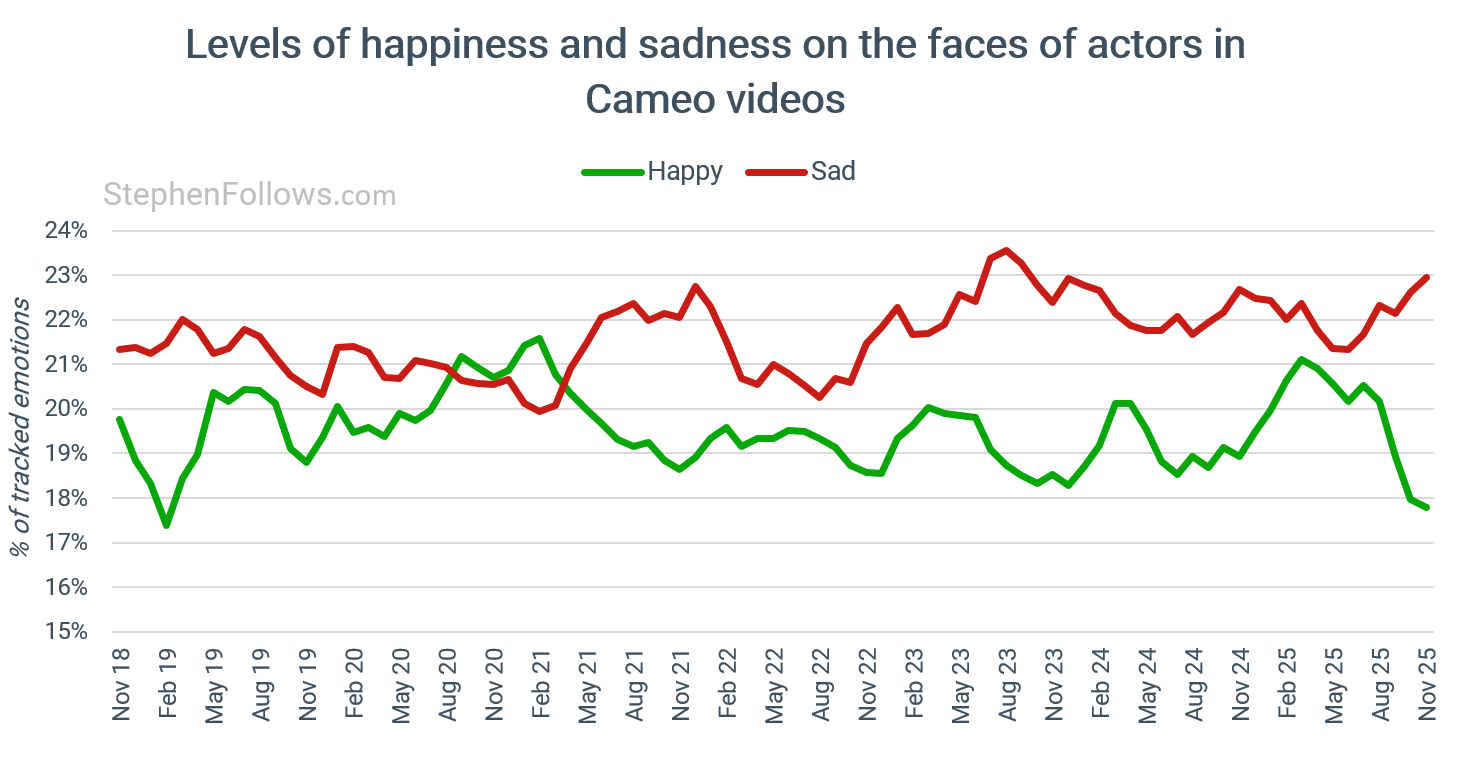
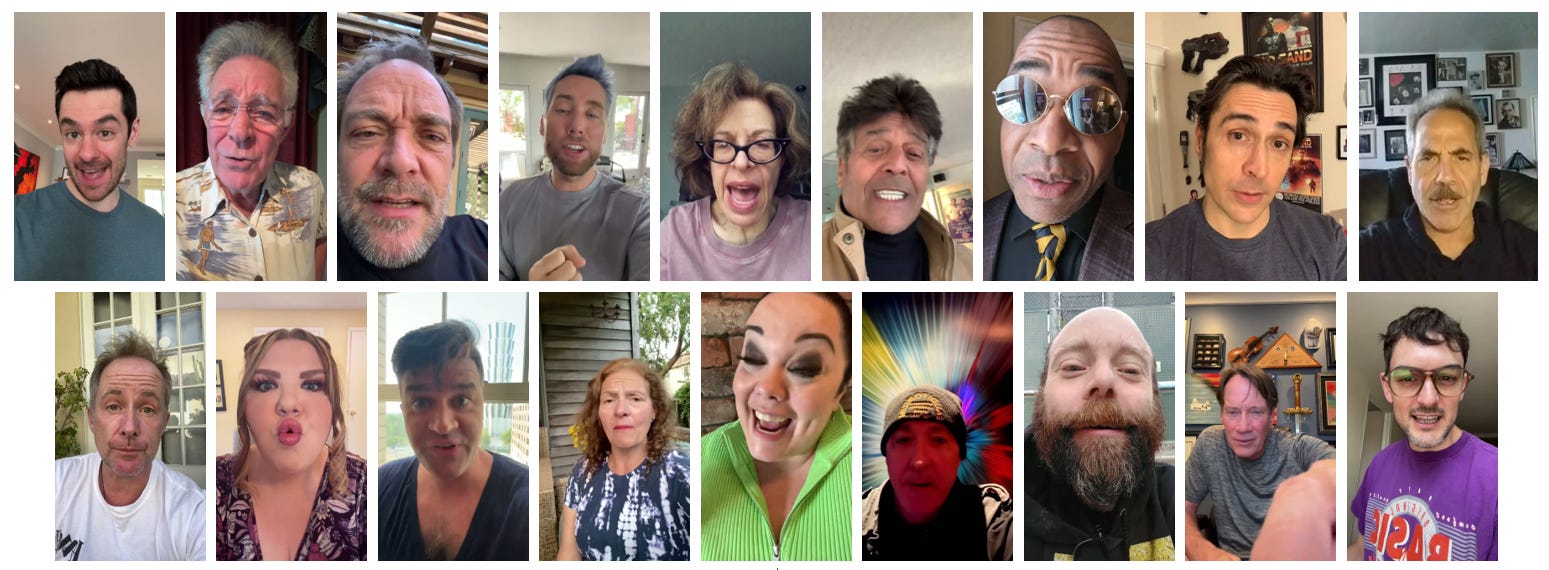
I wondered if I could go deeper into the actors’ experiences on the platform, so I analysed facial expressions in video thumbnails over time using automated emotion detection.

We do see lower levels of happiness and a comparable increase in sadness, but again, not at a level which would suggest a moral collapse.
To me, all this adds up to a shift in the platform. It’s moved from a novelty to being a job. And as with any job, it rewards repetition, volume, and familiarity.
5. How much do actors charge for a Cameo?
Note: Cameo shows rates in your local currency, so even though most actors are American, the data I gathered was in British pounds. At the time of writing, £1.00 is about $1.34.
The highest-priced actor is Rachael E. Harris at $2,500 / £1,868.06. Actors priced at $1,000 / 747.23 include Andrew Dice Clay, Nikki Giavasis, Donshea Hopkins, Mitchell Kummen, Bhumika Chawla, and Vulcan.
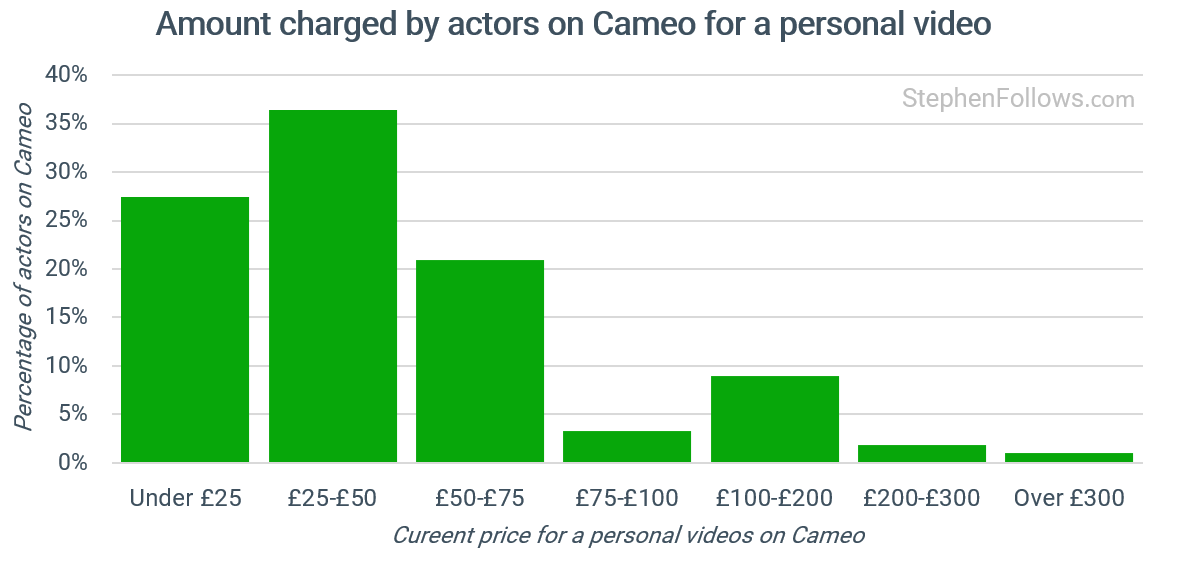
However, these are outliers. A personal video from an actor on Cameo typically costs between £25 and £50. This is the most common price band, covering 36.3% of all profiles in the dataset.
It’s worth noting that the actors can change prices at any time.
6. Do more famous actors charge higher prices?
An early question I had in this research was what the link was between fame in the public arena and the amount an actor is able to charge on Cameo.
To measure this, I ranked all 4,777 actors in this dataset by their IMDb STARmeter at the time of analysis. The STARmeter is IMDb’s measure of a person’s relative fame, updated weekly based on profile traffic.
The data shows us that the connection is weak. The Pearson correlation between fame and video price is 0.22 (a score of 1 indicates perfect correlation, and 0 indicates they are completely unrelated).
To show this visually, I have created the scatter plot below.
While a few high-ranked actors charge hundreds, plenty of others don’t. And some lesser-known names set higher prices than those with far more IMDb attention.
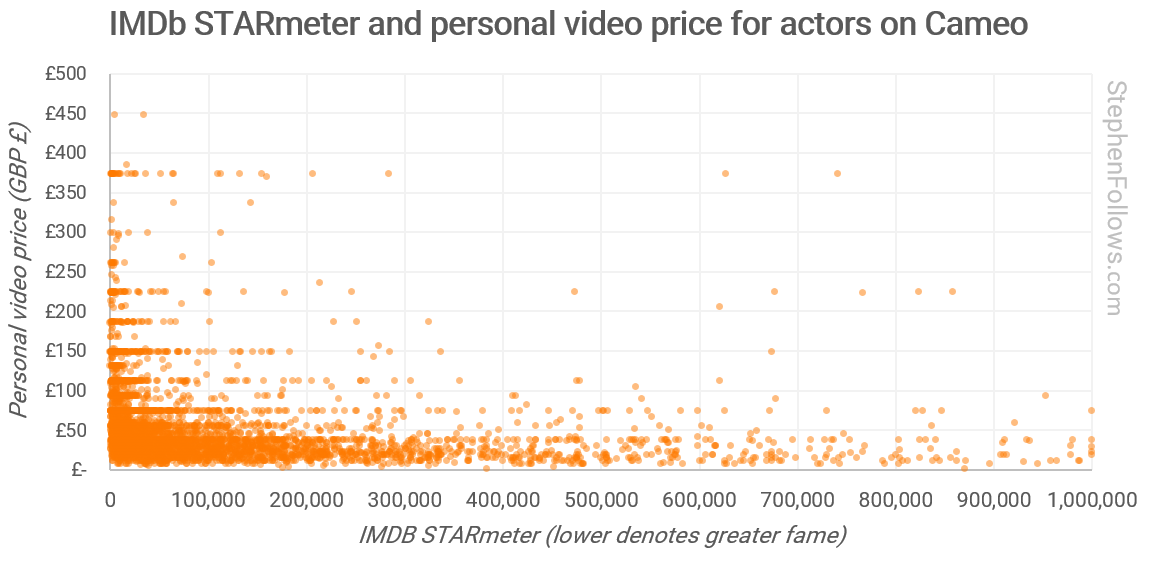
So fame does not drive the pricing logic. Each actor seems to set their price based on a mix of personal judgement, fan base, and perhaps how much they feel like talking that week.
7. Do famous actors earn more money than less famous ones?
Cameo doesn’t publish sales figures for individual performers. We don’t know how many videos each actor has delivered or how often they change their pricing. But we can estimate a minimum.
For each actor, I multiplied their current personal video price by the number of reviews on their profile. Reviews can only be left after a purchase, and only once per video. So this gives us a crude proxy for gross earnings.
This approach doesn’t capture videos without reviews, pricing changes, or business bookings. The real totals are likely higher. But the relative figures still help answer the question.
Compared with IMDb fame rank, the correlation with estimated gross is 0.27. That’s not strong. It means that more famous actors are slightly more likely to have earned more money on Cameo, but it’s far from a guarantee.
Fame helps, but it’s not doing most of the work.
So what is?
It’s the same as the job of being an actor in other realms - it’s about hard work and dedication.
8. Who are some of Cameo’s top acting earners?
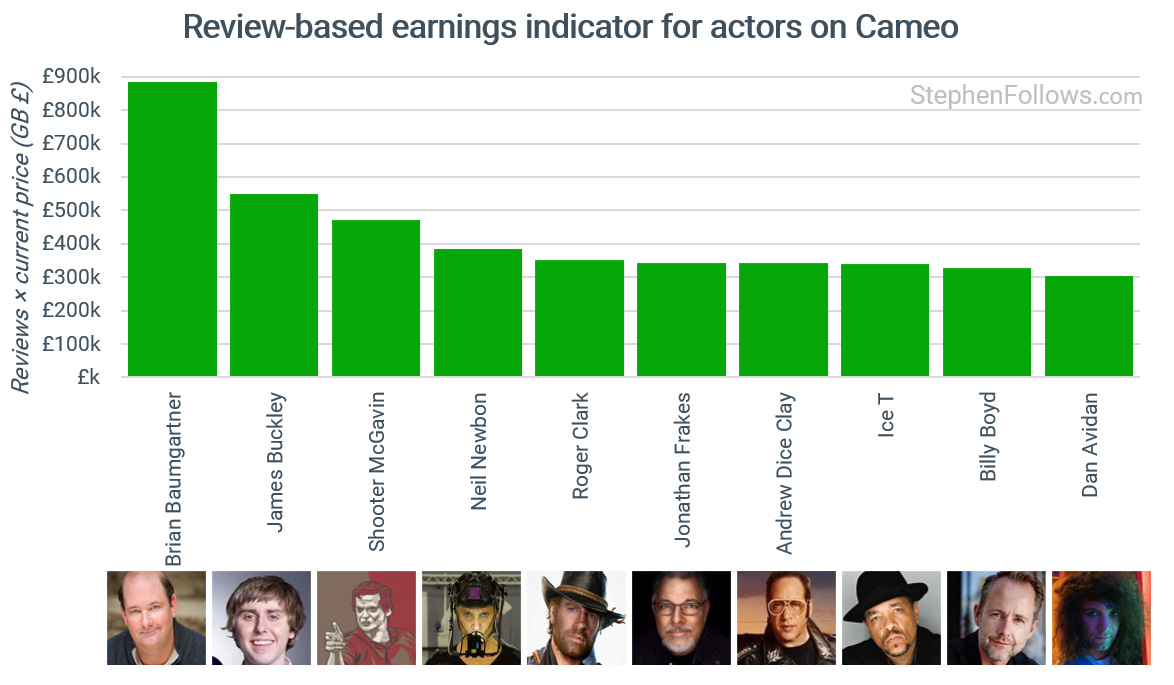
Some actors charge more, while others rely on volume. The top earners seem to do both.
They keep prices in a workable range and complete a steady stream of videos over time. Remember, these figures are just based on the current price multiplied by the number of reviews, i.e. a bare minimum for gross income, but still a useful indicator.
At the top of the list is Brian Baumgartner, best known for playing Kevin in The Office. By this rough metric, he’s earned over £850,000 on Cameo.
He’s followed by James Buckley (The Inbetweeners), Shooter McGavin (Christopher McDonald), and voice and performance-capture actors like Neil Newbon and Roger Clark.
9. Who are the most liked actors on Cameo?
Finally, I’d like to end on the people who are delivering high-quality, much-appreciated work to loyal fans.
There are 958 actors in the dataset who’ve never received a negative review (and had at least ten reviews in total). Every review they’ve ever received has been five stars.
That’s already impressive. But when we rank these actors by volume, a few stand out.
Doug Jones tops the list with 1,026 five-star reviews and nothing lower. He’s closely followed by Debra Wilson, Lisa Loeb, and Andy Buckley.
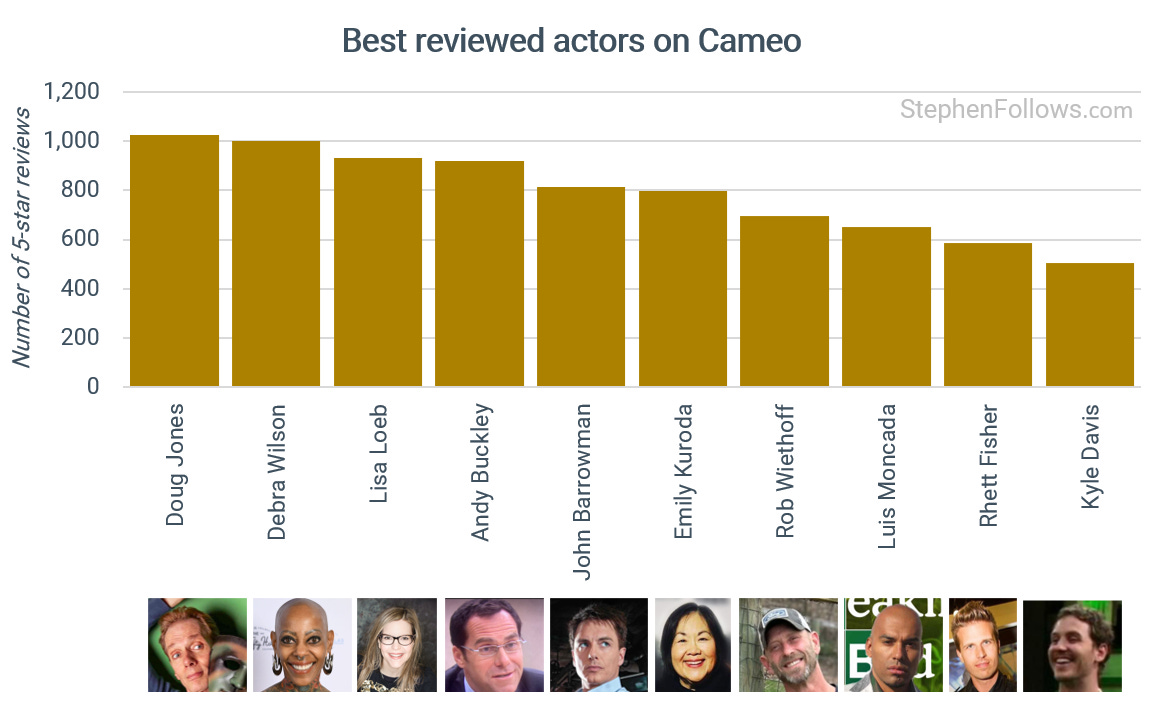
These actors are working hard, delivering volume, personalising their messages, and investing in the interaction.
And this is the heart of what I learnt. The best-reviewed actors on the platform aren’t always the most famous or the most expensive. They’re the most invested. They prepare, they perform, and they treat it like work.
In that sense, Cameo has more in common with regular screen acting than it might appear. It rewards people who are professional, consistent, and focused on the audience.
Fame helps. But what matters most is how you show up.
Epilogue - The view from the other side
I reached out to a number of actors on Cameo for their perspectives. I offered them the chance to speak off-the-record as I appreciate that this is their livelihood and I’d rather have honest insights over PR-friendly platitudes.
And I was touched by how many responded, and how open they were.
Here are just a few choice quotes which will hopefully help you see what Cameo is like from the actor’s side of the lens. In answer to whether it’s a “meaningful income stream” they said:
It’s not substantial but more like “fun money"
No, this is not a meaningful income.
The performer gets just over half of what’s listed.
Overall I think it was a pretty good system. I made a little bit of cash out of it and I found it fun.
For me, it isn’t a form of income, more to connect with fans which I find much more rewarding.
The overall vibe was positive (which, of course, it would be, as I reached out to those currently on the platform), but not universally so.
I definitely feel like I'm milking the fans. I understand they're excited to talk to me, which is one of the main reasons why I do it but it's very difficult for me to actually do the Cameo videos. I really don't like doing them. I wait forever till the last minute till I have to do them I feel like a loser doing them. I personally feel like it's A cheap excuse to make money it's like when you sit at a comic con selling eight by tens for 10 or $20. It just makes you feel like a hack.
I’m someone who’s always cringed at the idea of hawking myself on things like Cameo or at “cons.” I’ve joked that appearing at cons makes me feel like a cross between a carnival barker and a prostitute. It just feels a liiiiiittle smarmy— like I’m some kind of old timey snake-oil salesman. The idea of participating in something like Cameo just seemed tacky, to me.
On the connection it brings them with their fans:
This was the surprise. I found there is a lot of direct connection to fans, especially younger fans, who are in need of support and uplift. It’s mainly people who a word from a fan means so much. Greater than a comment or reply from social media. There is a mental health component that feels good.
I wound up thoroughly enjoying the process! I thought I’d HATE it. The people who make requests are either genuinely enthusiastic fans of your work, or they’re purchasing the cameo on behalf of a loved one who is. Performers create all of this content (in film/tv/social media) that goes out into the ether from wherever/whenever we originally performed it, and we have no way of knowing if it has any impact on people or if it has any meaning for anyone. Not really. So when you get to connect on a personal level, one-on-one, with a genuine fan, it just plain feels GREAT. We all want that feeling, right? It’s very validating.
I think Cameo was a marvellous idea. Fans seem get a big kick out of them, and it is splendid that they can have someone they enjoy but might not otherwise meet, communicate directly with them.
In my experience, Cameo is a way to directly connect to those who need to be heard in difficult times, and those are generally the ones I work harder to deliver on. If you’re going to pay 125 bucks for a comment from me then it will be because whatever I did in the past means something significant and it will brighten someone’s day.
On how the work is viewed:
Most industry insiders think Cameo is a joke. Like it’s for desperate actors needing money. Maybe it is. And if the actors need it, then that’s great; there’s a way for some to make extra income in this media apocalypse. There are very few jobs for serious actors these days.
My manager and agent hasn’t made any comments to me about it, I’m sure if they weren’t happy then they would.
I haven’t had any conversations about it with my reps.
Notes
I’m very grateful to the 30+ actors who responded to me and gave their thoughts on Cameo.
Today’s research is based on the public profiles of 4,777 actors on Cameo with verifiable film or television credits. I began with Cameo’s own classification of “actor,” but this includes many creators and influencers with no screen credits. I cross-referenced profiles with IMDb and Wikipedia to confirm which individuals had appeared in film or TV roles.
I gathered the review data from Cameo’s public information and, in total, tracked 407,017 reviews, including both star ratings and text comments. Only reviews attached to paid videos are published, and only one review is allowed per purchase. Therefore, each review corresponds to at least one paid video and can serve as a consistent minimum benchmark across the dataset.
To estimate gross earnings, I multiplied each actor’s current personal video price by their total number of reviews. This does not account for:
Orders that did not receive a review
Changes in pricing over time
Additional revenue from business or promotional bookings (the actors I tracked charge an average of 17.1 times their personal video cost for a Cameo Business video).
Refunded on poorly reviewed videos (a very small factor, based on the review data).
As such, this figure should be treated as a minimum, rather than an accurate reflection of total income. The real totals are likely significantly higher.
Facial emotion analysis was performed on video thumbnails using the DeepFace Python library. Emotion scores (including happiness and sadness) were generated via the library’s convolutional neural network, trained on labelled facial expression datasets.
The number of active actors on the platform was calculated using a running monthly balance. For each month, I counted how many actors joined and how many had their final delivered video, then carried that net change forward. This allowed for a rough measure of the number of working actors on the platform over time.
IMDb STARmeter rankings were used as a proxy for public-facing fame. These are updated weekly by IMDb and reflect user traffic to individual profiles. Lower numbers indicate higher interest.
All prices were shown to me in GBP (£), as Cameo converts prices based on the viewer’s location. Exchange rates at the time of writing were approximately £1 = $1.34 USD.
Data was collected in January 2026.
Hey Stephen, why don't you do the Ultimate report on celebrities using OnlyFans in the last 10 years. Cardi B made $45m without even going topless!