


A couple of years ago, Sony re-released a movie that had flopped only a few months earlier.
Morbius had died at the box office in April 2022, opening to $39.1m and then dropping 74% in its second weekend. But over the following weeks, a meme playing on the film’s dreadful dialogue (’It’s Morbin’ time’) had taken off.
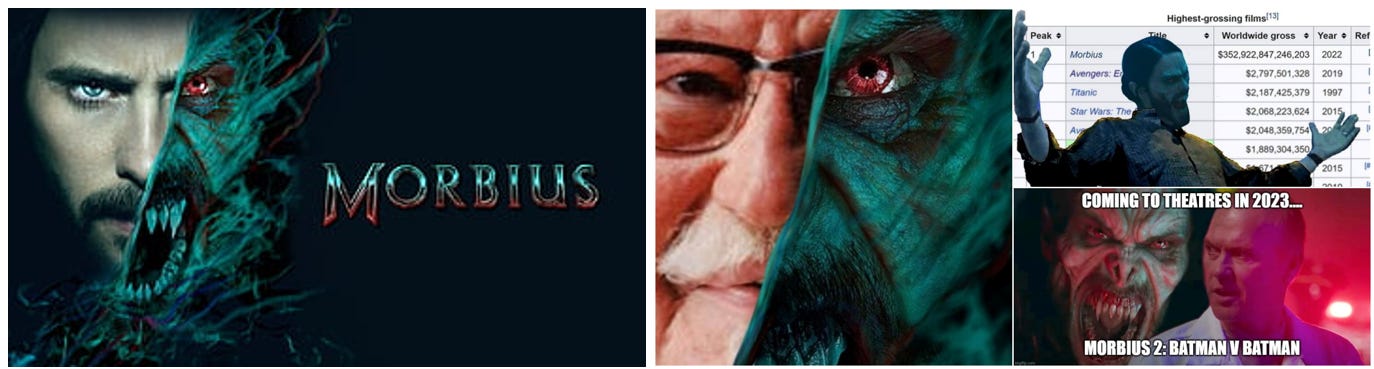
Sony read this massive increase in engagement as demand for the movie and decided to re-release it theatrically on 3 June. It did not do well. The re-release took roughly $300,000 across 1,037 cinemas, which works out as a per-screen average of $300, or 30 tickets over three days. Yikes.
And this is not an isolated experience. A number of movies have thrived and failed to capitalise on internet meme fame. And yet, some of the biggest moments for cinema in the past few years have been driven by memes and outsized online interest.
So how can we separate the memes that mean money from the fads that fuel failure?
I have isolated 24 movie meme moments, from Barbie to Cats, and looked for patterns in the wins and losses. After all that, there are some pretty clear lessons for studios and movie marketers.
I’m going to go through examples of both virality working and failing, talk about how studios try to manufacture these moments, and end with tips for how to know when a meme means money.
Viral moments which did not drive Box Office
Let's start with an example in which a film's inclusion in a popular meme did not translate into box-office sales.
Cats (2019) is one of the biggest examples. When the first proper trailer dropped, the movie’s ‘digital fur technology’ sparked no end of online conversation and became a global punchline weeks before release. Then the film opened to $6.5m against tracking that had once hoped for $14m to $17m.
The internet’s reaction to Cats’ fur somewhat mirrored the film press corps’ reaction to the full version of Megalopolis (2024). Francis Ford Coppola’s self-financed opus cost $120m to make but opened to just $4m domestically.
When PostTrak asked buyers why they had chosen to see the movie, 61% said ‘because of Coppola’, and only 9% said they had ‘heard it was good’. Megalopolis sold on morbid curiosity to a tiny audience of people who wanted to witness the car crash in person.
Snow White (2025) probably had the longest and loudest run of pre-release bad headlines than any movie in recent history. So on the one hand, there was high awareness and a strong viral conversation, but on the other it was almost entirely negative. It opened to $42.2m on a reported $336m budget and fell 66% in weekend two. Being talked about constantly is not the same as being wanted.

These three examples all have one thing in common - the joke was that the movie was bad. But that’s not the main common thread in the memes which don’t convert to tickets.
Saltburn (2023), because it went viral in a big way, with Saltburn-themed videos racking up nearly 4 billion views on TikTok, and Sophie Ellis-Bextor’s ‘Murder on the Dancefloor’ shooting back up the charts. Despite this, the film’s global Box Office takings were the same as its reported budget ($21.1 million vs $20 million).
The memes that could
Now let's look at some viral moments that did seem to drive success on the big screen.
Minions: The Rise of Gru (2022) is the model. The ‘#GentleMinions’ trend had teenagers turning up to screenings in suits, filming themselves treating a kids’ cartoon like a black-tie event.
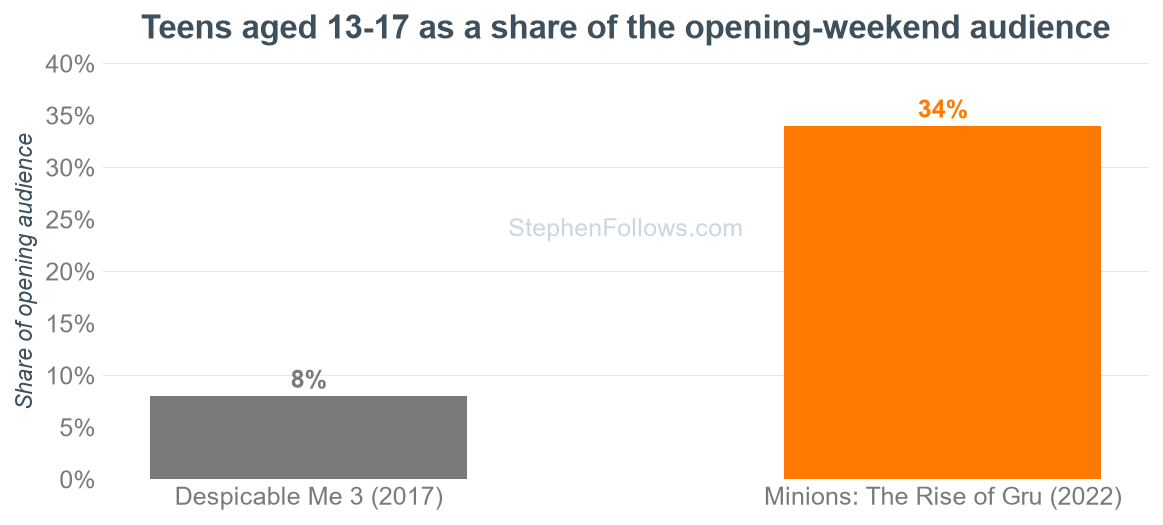
Illumination was expecting their movie to take $70m to $80m over the four-day opening. It ended up taking over $125m. A key part of those extra audience members was, unusually for a Minions movie, 13-to-17-year-olds, who accounted for 34% of the opening audience, compared with just 8% for the previous film in the series.
A Minecraft Movie (2025) also tracked at $70m to $80m but opened even bigger than The Rise of Gru, at $163m. The ‘chicken jockey’ meme, in which audiences shout and throw popcorn at a specific line, erupted soon after its release, extending the film’s life on the big screen. Warner Bros leaned in, formalising it with official rowdy ‘Block Party’ screenings that gave people a fresh reason to go back.

