


I have been asked for years whether “Go Woke, Go Broke” is true for movies. So it was a real honour to be able to give the keynote today at the Zurich Summit and answer the question.
Over the last few months, I have conducted a large-scale study to test whether films that attract more audience discussion of woke-adjacent themes tend to perform differently at the box office.
And the results are in.
A quick note on what this is and isn’t
When I first looked into this topic, I examined whether we could track what I call woke-adjacent themes in films. That work attracted a lot of commentary, with people across the political spectrum citing the results to support their own positions. In some cases, my analysis was co-opted into arguments I was not making.
So let me start by saying a few things:
This is not a personal essay nor a political statement. It is a study of measurable correlations between how people talk about films and how those films perform.
We’re tracking subjective thoughts in a subjective medium, centred around a subjective notion (i.e. “wokeness”). That said, the patterns I am highlighting are strong and consistent.
Movies are both art and business. There are many reasons why films are made and many ways they are judged, with profit being only one of them. Studios are multinational corporations with shareholder obligations, meaning that financial performance is an unavoidable part of their decision-making. Independent films sit in a different space as many investors will be motivated by impact or personal passion as much as by financial return.
What is “woke” and how do we track it?
Woke is a shifting and contested term, used as praise by some and as criticism by others.
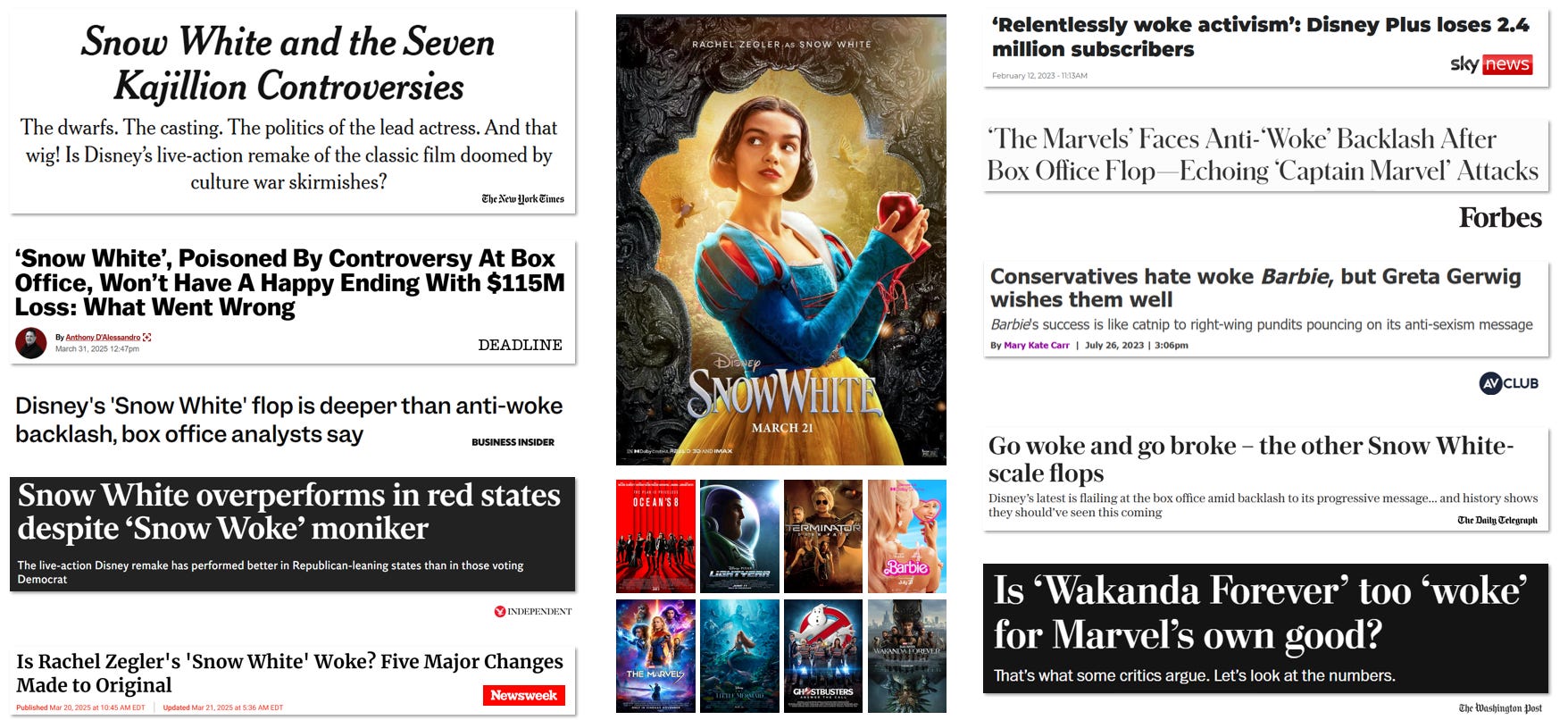
To make it measurable, I broke it down into “woke-adjacent” themes that consistently appear in audience conversations. They largely fall into the following five categories:
Representation & Diversity (casting, character focus)
Identity Politics (gender, race, sexuality)
Political & Social Messaging (justice, inclusion, activism)
Canon & Continuity Changes (gender / race swaps, rewriting lore)
Cultural Tone (modern language, virtue signalling, didactic framing)
Instead of labelling films as woke or not, I tracked when these themes were present in how people talked about them.
It’s a complex spectrum of perception, across a number of intersecting themes. For example, below are twelve movies from recent years which have, to varying degrees, been brought into the woke conversation.

When we consider the accusations made against each, we can see that there is a whole landscape of topics.
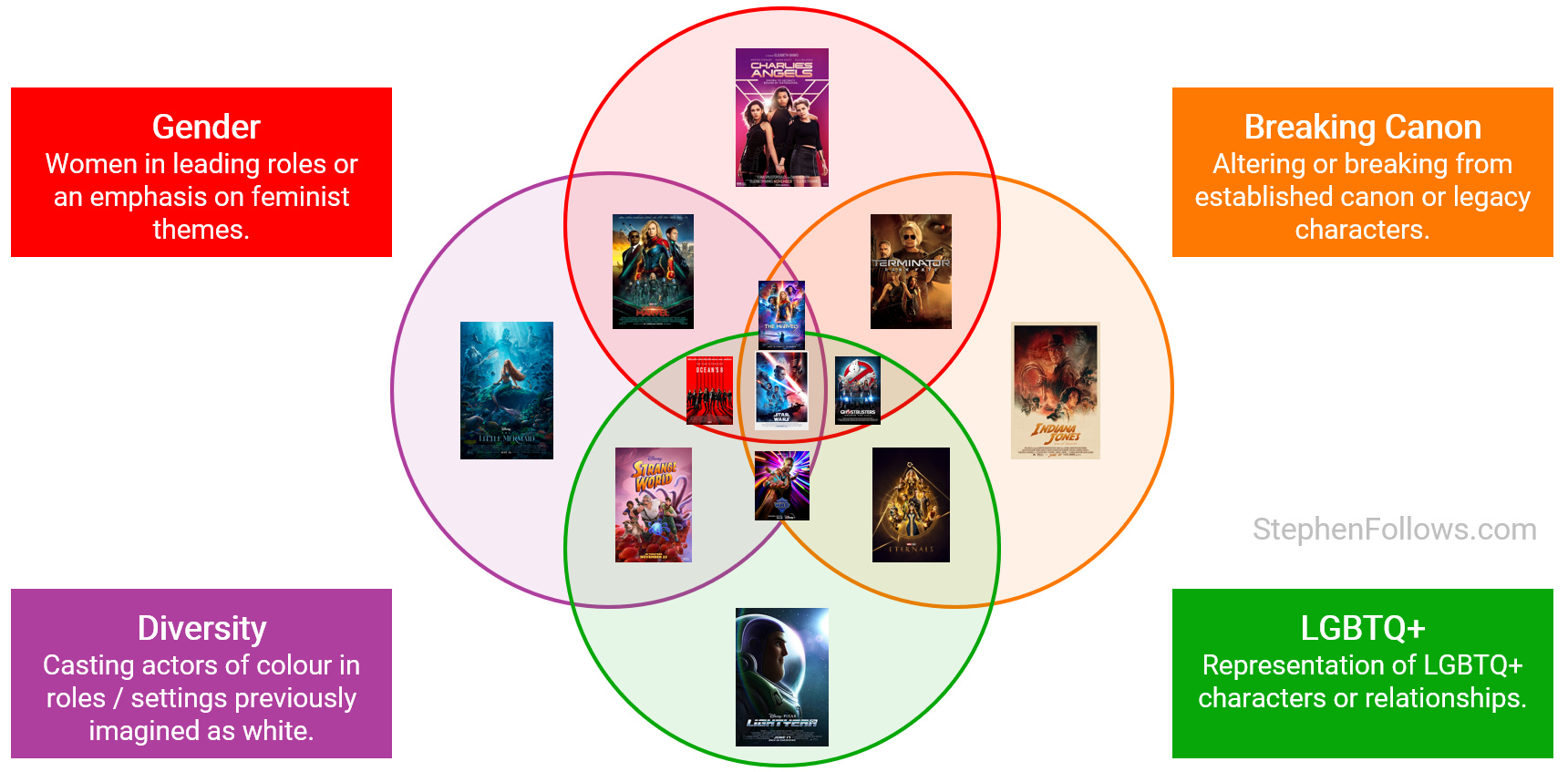
If you want a more detailed breakdown of this process then head over to my previous article on the topic Can we measure if movies have become "too woke"?
To discover the effect of these themes I analysed more than 4 million user reviews across 10,524 films and tracked the correlation with film profitability.
I have put details of methodology at the end of the article so that we can get straight into what I discovered.
Is ‘Go Woke, Go Broke’ true for movies?
So is “Go Woke, Go Broke” true? The short answer is no.
Movies are too varied for such a simple phrase to capture the reality. Some films with woke-adjacent themes perform very well, while others underperform, and the same is true of films without those themes.
But it’s not without grains of truth.
What emerges from the data is an effect that depends heavily on context. Budget level and genre shape how risky certain choices are. At the very top end, where hundreds of millions are invested and returns are scrutinised worldwide, overt or clumsy political messaging tends to be punished. In other spaces, particularly horror, music, or sports, identity-driven themes can connect strongly with audiences.
The slogan makes for a neat headline, but the reality is more complicated.
Let’s dig into it.
Where woke-adjacent themes hurt profitability
Let’s start with the strongest negative correlations - i.e. if you solely care about making money with movies, then you should steer clear of these woke-adjacent ideas.
1. Heavy-handed moral lecturing in big-budget films
The larger the budget, the greater the financial risk. Audiences tend to punish heavy-handed political or cultural messaging in expensive blockbusters, where broad appeal is critical.
When messaging feels bolted on or too explicit, audiences push back and profitability suffers. Don’t Look Up (2021) was criticised as “without trace of subtlety” while The Woman King (2022) was accused in reviews of trampling historical accuracy for the sake of its empowerment message. Whether or not those views are fair, once audiences feel lectured, the film pays a price.

2. Breaking continuity in established franchises
Changing the perceived “contract” of a long-running character or series raises the risk of backlash. Small adjustments may be accepted if they feel authentic, but multiple or fundamental changes multiply the danger.
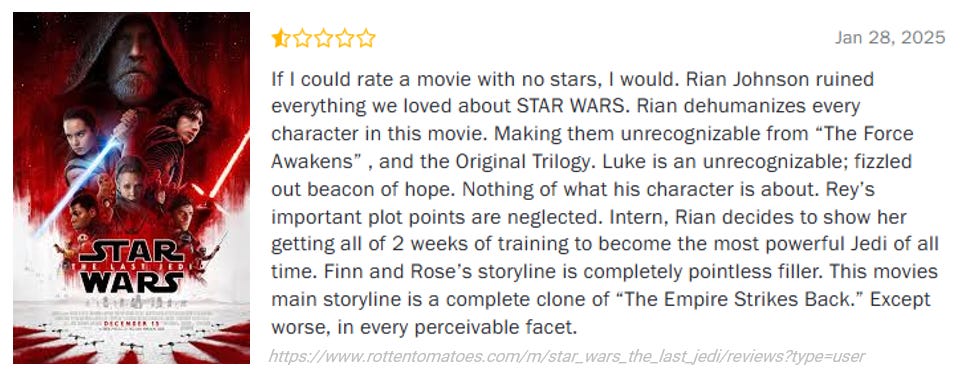
Franchise audiences expect consistency. Changing a defining element can feel like betrayal, especially if multiple changes stack up at once. The Last Jedi (2017) provoked backlash from fans who said characters were “unrecognisable,” and Ghostbusters (2016) faced fierce criticism for its all-female team.
By contrast, spinoffs like Bumblebee or reboots like Scream (2022) worked because they refreshed without discarding the essence. The data shows continuity breaks are one of the riskiest moves for established IP.
This is probably most acute now when it comes to the conversation about who should be the next James Bond.
We all share a Platonic idea of what the character of Bond is. He’s British, suave, authoritative, with a charming masculinity. The actors who have portrayed him thus far have also shared many qualities, namely they have been white, middle-aged, conventionally attractive men with athletic builds in a sharp suit, and with a polished physical presence signalling both sophistication and danger.

The data suggests that the further a new Bond strays from the qualities audiences perceive as canonical, the more profitability risks increase. Even Craig’s “Bond who bleeds” was framed as a major reinvention despite being a subtle shift, showing how sensitive the role is to change.
3. Modern terminology in immersive worlds
Audiences expect dialogue to feel consistent with the world on screen. Contemporary slang in a historical or fantastical setting often breaks immersion and gets called out as pandering.
Persuasion (2022) set in Regency England drew ridicule for lines like “the thing about me is, I’m an empath” while The Last Duel (2021) placed phrases like “this is just science” in 13th-century France. Viewers felt these choices clashed with the setting and undermined authenticity.
4. Perceived inauthenticity in historical or biographical films
Films rooted in history carry an expectation of accuracy. Even small liberties can be seen as ideological rewriting, damaging trust. Mary Queen of Scots (2018) faced pushback over inaccuracies, and Selma (2014) was attacked for downplaying Lyndon B. Johnson’s role in the Voting Rights Act.
The key issue is not always what is academically true, but whether audiences feel they are being handed a version of events that lacks authenticity.
(This connects to what linguists call the ‘Tiffany problem’ which is when something that really did exist in history feels false to modern audiences. The name comes from the fact that Tiffany was a common medieval girl’s name, but today people see it as anachronistic, so it gets rejected as inauthentic even when accurate).

Where woke-adjacent themes help profitability
So far we’ve seen four ways woke-adjacent themes are negatively correlated with profitability. But there are many cases of the inverse - where progressive themes were positively linked to commercial outcomes.
1. Horror films thrive on reinvention
Horror has the youngest adult audience of any genre, and those viewers are generally more receptive to contemporary themes.
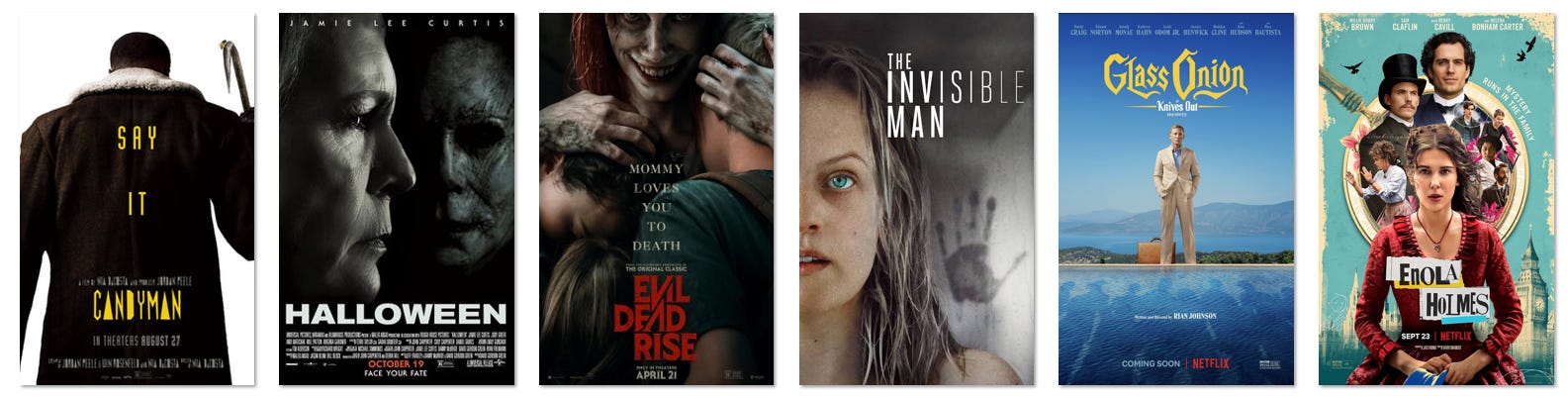
Also, the genre itself is built on confronting taboos and reframing cultural fears, so layering in identity-driven stories can feel natural. Candyman (2021) used gentrification and Black identity to refresh the mythology, while Evil Dead Rise (2023) shifted the setting to a city high-rise.
These choices strengthened rather than weakened audience engagement, and across low-budget horror overall, woke-adjacent themes correlated positively with performance.
2. Thrillers benefit from shifting perspective or canon
While continuity risks are high in major franchises, mystery and thriller films often gain from a twist in framing.
The Invisible Man (2020) retold a classic story from the victim’s perspective
Glass Onion (2022) transplanted its detective into the world of tech elites
Enola Holmes (2020) centred the tale on Sherlock’s younger sister.
These changes gave audiences something fresh while still delivering the core genre experience. Reinvention in thrillers is rewarded rather than punished, particularly with younger audiences.
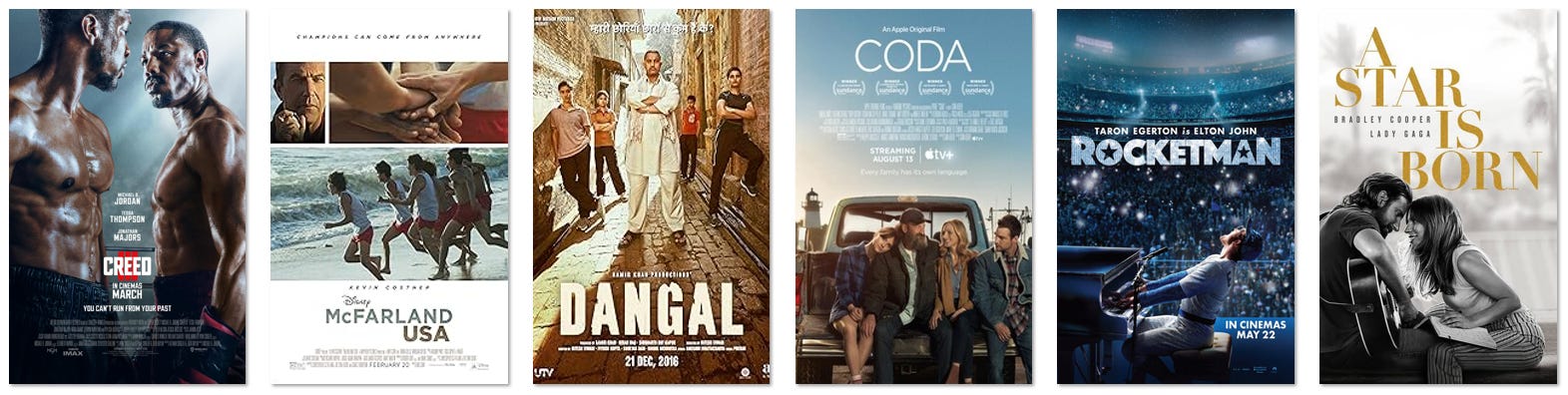
3. Sports films welcome identity narratives
The structure of sports stories (i.e. struggle, perseverance, and acceptance) aligns well with themes of identity.
Characters trying to join a team or prove themselves on the field mirror broader stories of belonging. Gender-swapped or underdog narratives work here because the genre expects uphill battles and celebrates resilience.
A player lifted by the crowd at the end is both winning the match and being accepted for who they are. This makes sports films unusually fertile ground for identity-driven storytelling.
4. Music films support moral and identity themes
Stories built around music often blur realism and fantasy, allowing overt themes to feel more authentic. Songs can carry emotional or moral weight more directly than dialogue, which helps audiences accept identity-driven stories.
CODA (2021) explored both deaf family dynamics and a young woman’s musical ambition
Rocketman (2019) wove Elton John’s sexuality and struggles with addiction into a musical biopic
A Star Is Born (2018) used music to heighten themes of fame and self-destruction.
In this space, moral or identity themes enhance the experience rather than distracting from it.
The overall conclusion
“Go Woke, Go Broke” does not hold up as a general rule. Films are too diverse, and audience responses too varied, for a cute slogan to explain outcomes across the whole industry.
What the data shows is that context matters, with the same theme that strengthens one film can weaken another, depending on budget, genre, and execution.
Risks multiply when several sensitive factors are combined, and rewards appear when themes align naturally with the purpose of the genre.
And a good story well told will overcome most reflexive objections. For example, when considering how much Amazon can stray from the Bond we know and love, we should consider the casting to Renée Zellweger as British icon Bridget Jones in 2000.
Initial news of the Texan’s casting caused outrage among the Bridget Jones fanbase. But thanks to Zellweger’s dedication to the role (i.e. gaining weight for the role, changing her look and working undercover in the UK as research), along with her talent (the spot-on British accent, and her on-screen performance) the audience were won over.
The takeaway is not that filmmakers should avoid or embrace particular ideas, but that success comes from handling them with authenticity and awareness of context. Big-budget projects carry the greatest scrutiny, while smaller genres can often integrate identity-driven stories more effectively.
Notes
I built a dataset of over four million user reviews and comments across more than 50,000 feature films. Using language similarity rather than keyword matching, I tracked how closely each review aligned with a set of dummy texts I had written to capture different cultural or political themes. These included ideas such as representation, inclusivity, political messaging, canon changes, and overt signalling. If a film’s reviews clustered near a dummy text, that film was counted as having audience conversation about that theme.
Box office figures and budget estimates were drawn from publicly available sources, then used to calculate broad profitability measures and sense-checked by inside figures I have on real projects.
The analysis focuses on correlation. It asks whether films that audiences discussed in connection with certain themes tended to perform differently at the box office. It does not claim that those themes caused the outcome, only that they are associated with it.
The categories used here are not fixed definitions of “woke.” They are recurring ideas that audiences themselves bring up when talking about films. The purpose is not to decide which films are woke or not, but to measure patterns in audience response at scale.
It is also important to note that “woke” itself is a contested and shifting term. What counts as woke-adjacent in one person’s eyes may not in another’s. The categories here reflect recurring themes that audiences themselves bring up, not a fixed label imposed from above.
The data highlights patterns worth paying attention to, but it cannot tell us what films should or should not be. That remains a creative choice.
When I have highlighted an example I am not saying they were unprofitable, nor that they were the worst offender of the topic. It’s just a handy way of bringing to life the ideas. The findings are about overall correlations, not pointing to the faults of any one film.
This is how complexity should always be analyzed
Wow! Another great piece, Stephen! This has become my favorite thing to read online by far!