


I am writing this as I fly out of Toronto, after spending five days at the film industry’s brand-new major market, TIFF: The Market, attached to the 51st Toronto International Film Festival.

A number of folk have asked me for my views on what it was like, and what the future may hold for this newcomer. The most common question I have been asked is if I see it becoming a major part of the film calendar in the years to come.
My current feeling is - yes, but not for the reasons you think.
Here are my seven reasons I think the industry should expect to see TIFF: The Market as a long-term fixture on the film calendar, along with my observations from walking the halls, and what challenges it may face in the coming years.
1. There was always a market in Toronto
Part of the reason TIFF felt so confident launching a new official market at scale is that the TIFF festival has had an unofficial marketplace for years. The festival has long drawn producers, sales agents and distributors, and it screens so many new films that informal market negotiations were already happening in cinemas, cafes and hotels at TIFF.

One seller told Deadline:
We were already treating Toronto like a market
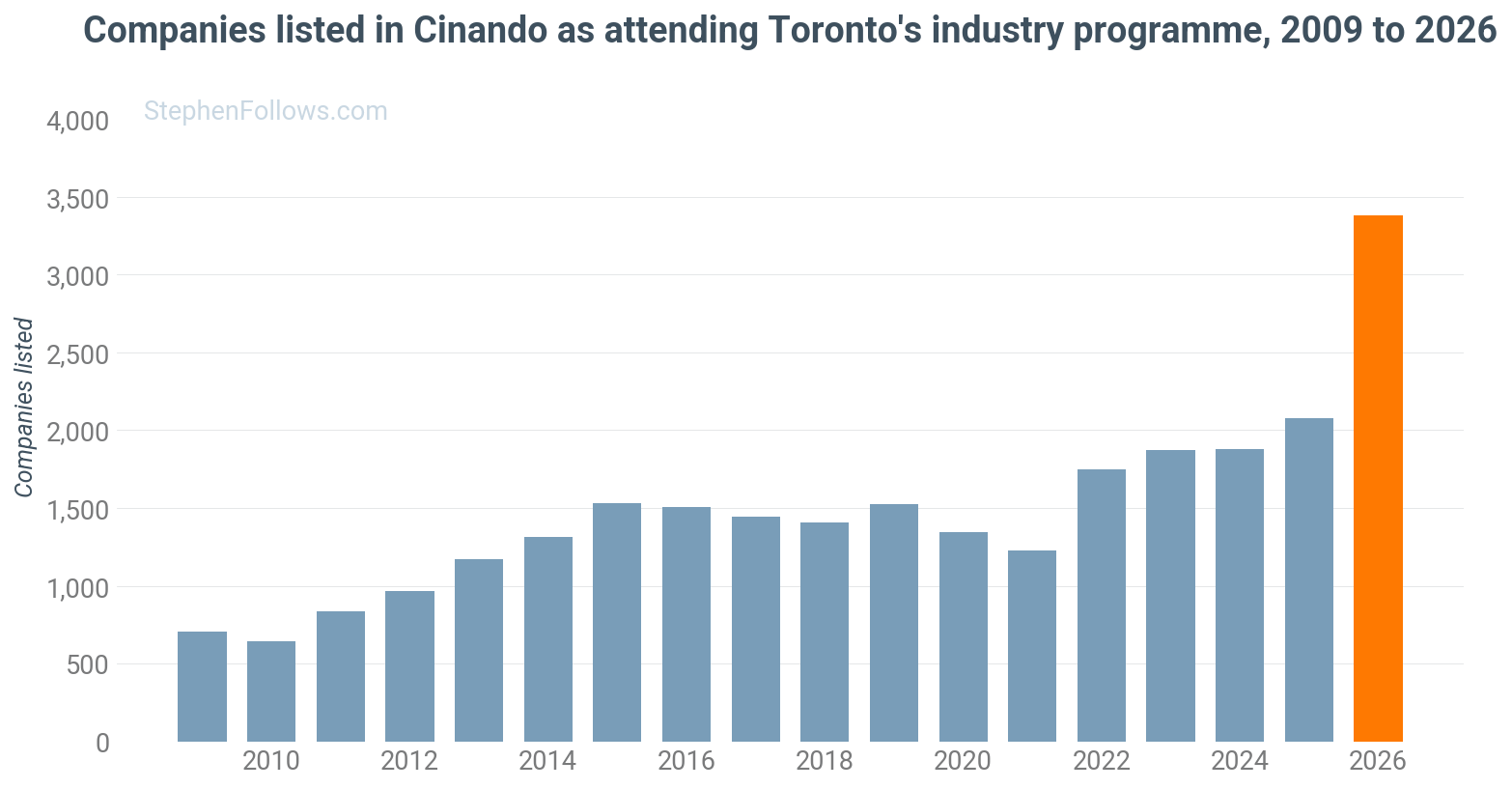
Cinando, the industry database run by the Cannes market, lists the companies attending TIFF's industry programme back to 2009. The numbers have doubled between 2009 and 2015, were flat until the pandemic, and have grown again in the past few years.
Cinando lists 3,377 companies as attending the 2026 Market as of opening day, 63% more than it lists for 2025.
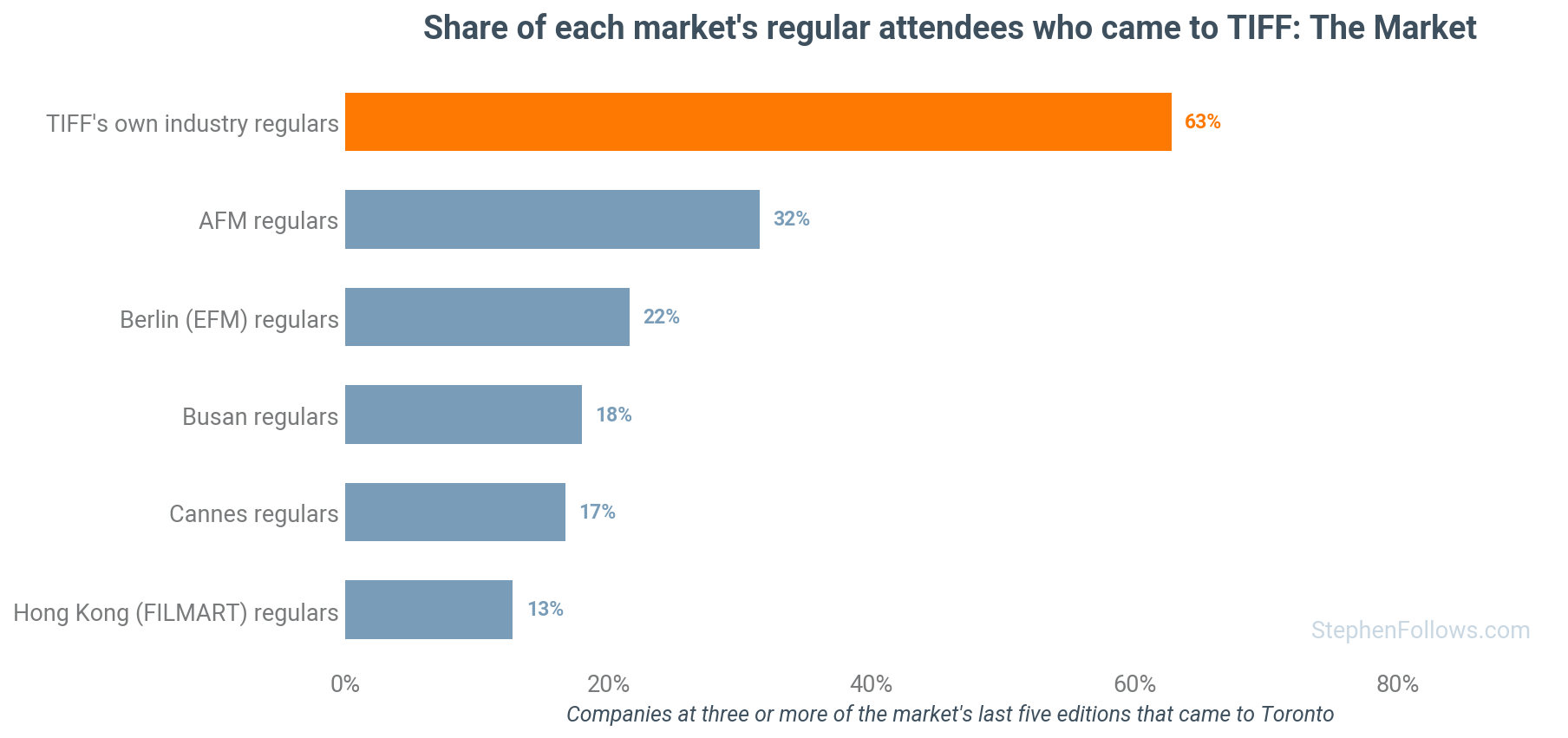
Of the companies that came to TIFF’s old industry programme most years, 63% came to the Market this year, meaning that its formal status didn't scare off the crowd already there.
And of the companies that go to the other markets most years, a meaningful minority came too. 32% were AFM regulars, 22% were Berlin regulars, and 17% were Cannes regulars.
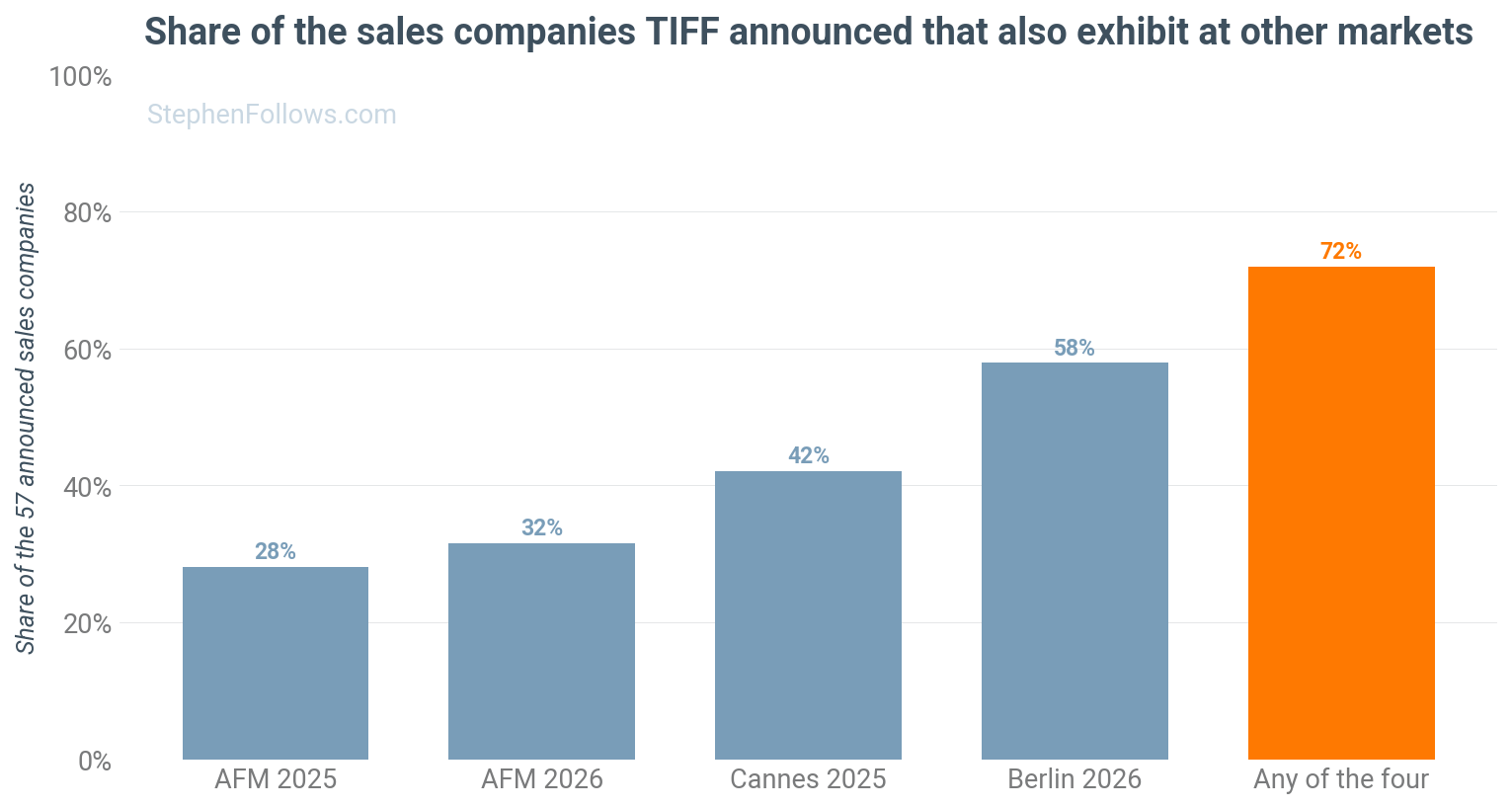
Of the 57 sales companies that TIFF announced as participating, 72% have had a presence at the other big markets.
So to some extent, the first TIFF: The Market was just business as usual - just with free coffee. Which brings me to my next reasons I think TIFF’s a long-term prospect…
2. It looks well run
The feedback I heard from talking to people on the market floor was that the market was competently run. There were certainly a few hiccups, but everyone seems to be accepting that this was year one, so lessons are being learned.
The biggest issue was a severe delay in printing some market badges (mine wasn’t ready until my fourth day on the ground), but the TIFF digital badge system made it easy to overcome. I could use my badge in my Apple Wallet for access to everything, so I never needed the physical badge.
(This also meant I couldn’t leave it behind in the hotel room, and I was free of the lanyard that told locals I was an interloper. I do hope all markets and festivals follow TIFF’s example of a fully digital accreditation system).

But beyond the badges, things seem to run smoothly. The layout is very people-centric, with the market’s hub a free coffee booth surrounded by ample seating, from tables to armchairs to beanbags for truly relaxed business negotiations. (Which is just as well as the bar at the main InterContinental hotel has a cover charge of C$150 for a table of four!).
Cannes’ Marché and Berlin’s EFM are stuck with the buildings they have and the ways of working that grew up in them. Toronto got to think about what a market should look like in 2026 and build that. The festival’s staff and infrastructure were already friendly and well organised, so the Market fitted in smoothly.
There’s no doubt that the market was quieter than TIFF will want it to be in the future. Barry Hertz of the Globe noted:
The Market revealed some growing pains on its first day, with many delegates reporting surprisingly long lines to pick up their accreditation badges, if the passes had been printed by staff at all. Combine that technical snafu with the sparse level of activity on the convention floor – a space that is taken up by a conspicuously large food-court area, whereas you’d expect more company pavilions – and it wasn’t the best first impression for the Market.
3. It sits on top of a festival that works
TIFF has long been a much-loved, large festival, attracting new and established names. It is the unofficial kick-off for the Oscars race and consequently attracts big-name stars and creatives.
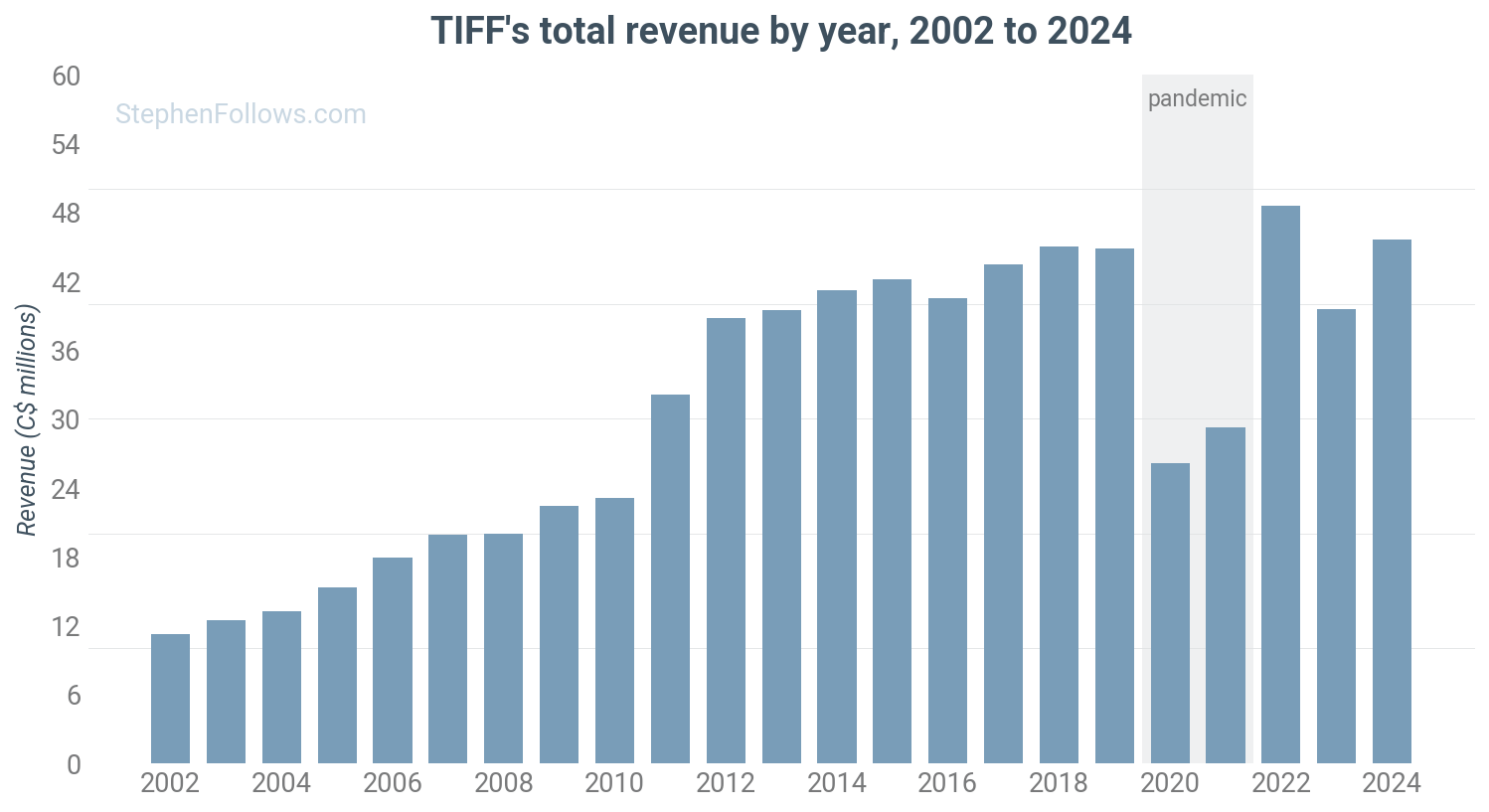
Most new markets have to build an audience and infrastructure, whereas TIFF did not. TIFF’s revenue has grown from C$11m to C$46m since 2002, and TIFF has stated that its industry crowd was around 5,000 before the Market existed.
A standalone market has to build everything from scratch, including the brand, staff, accreditation system, ticketing, promotion, and press office. By contrast, TIFF already had all of that in place, and most of the people who run the festival can run the market too.
This mirrors how the Cannes Marché du Film operates. A private company wholly owned by the festival, called SOGOFIF, runs the market and reported €11.1m in revenue, €1.8m in net profit and a staff of 23. That's right - the world’s biggest film market officially only employs 23 people, as it can operate on top of the festival’s existing infrastructure. This puts the AFM at a distinct disadvantage when compared to Toronto, Cannes, and Berlin.
It even extends to the non-physical aspect. TIFF: The Market launched with a ready-made hero story. At last year’s TIFF festival, Focus Features bought Curry Barker’s Obsession, budgeted at $750,000, for a reported $15m, and it has since taken more than $513m worldwide. I heard it was referenced a lot over the weekend and provided the perfect aspirational story for every filmmaker, funder and distributor at the market.
4. It is North America without being America
Buyers from Europe and Asia need a film market in North America, but right now at least, many are nervous about the United States.
Mark Gooder of Cornerstone Films told The Hollywood Reporter last year that he:
…would be much happier with a trip to Toronto than with dealing with Homeland Security.
Anita Lee, TIFF’s chief programming officer, called the political situation:
…a little bit of a silver lining.
And a Quebec producer told CBC on opening day:
The U.S. is done. It’s Canada’s turn now.
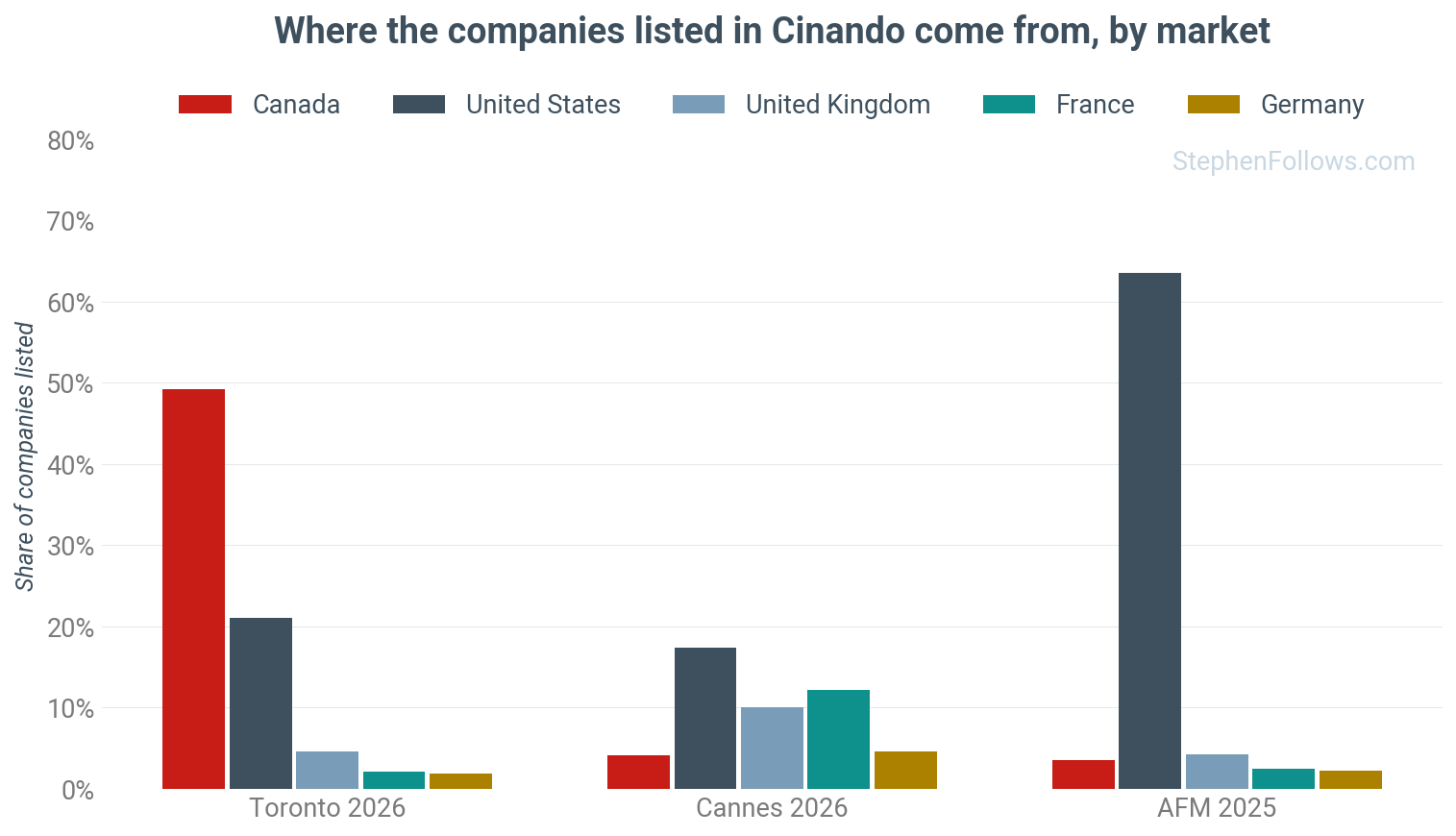
When we look at where attendees are travelling from, we learn that last year’s AFM was nearly two-thirds American. Toronto is a fifth American and half Canadian.
5. It is public money and a point of national pride
Some of the most sustainable aspects of the film industry are those backed by government money, and where the funded activities serve a political narrative.
