


I suspect many people share a gripe I have about movie posters.
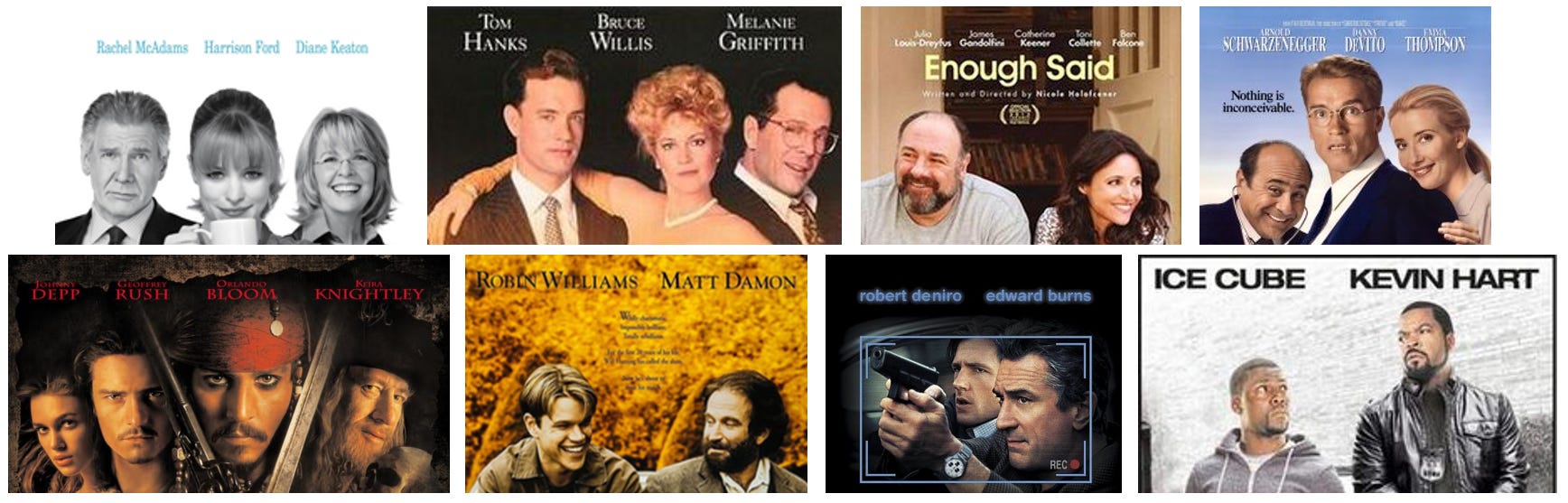
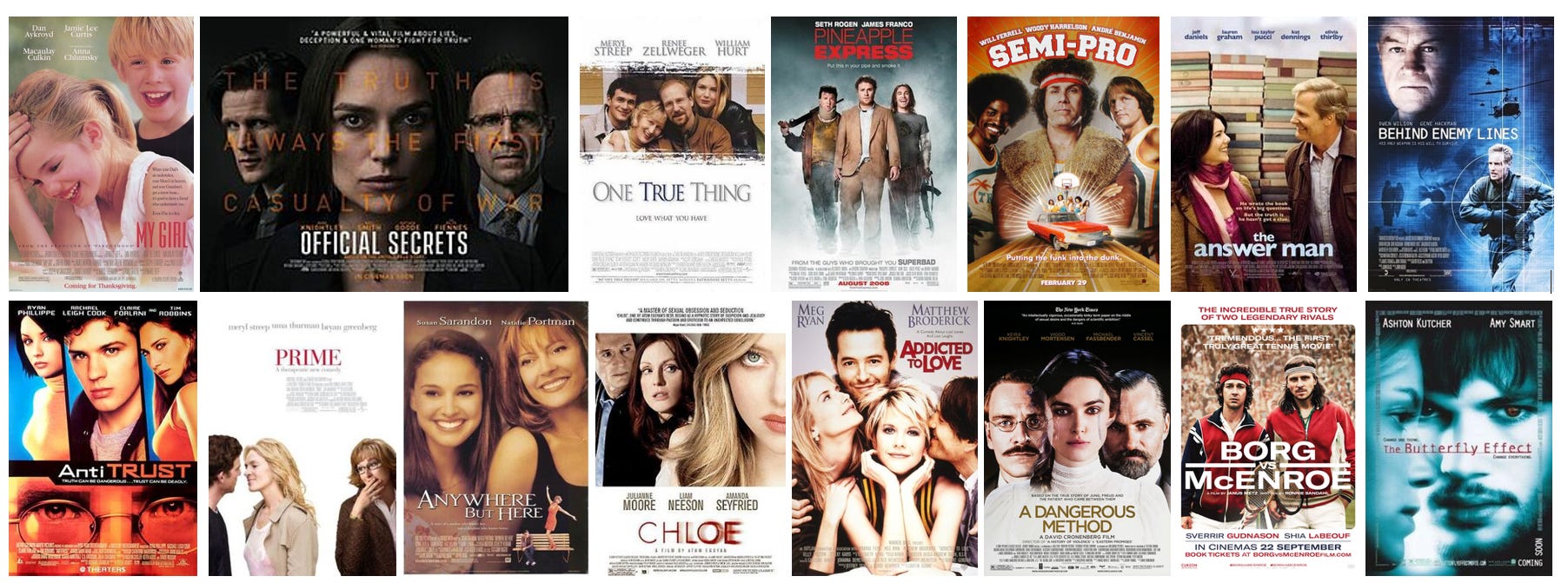
Specifically, that the names of actors across the top rarely sit over the heads beneath. Once you start looking, you cannot unsee it. Even two-handers manage it.
I saw it again recently and wanted to find out just how common it is.
So I gathered posters for over 4,000 movies released in US theatres since 2000 and got to work. I focused on the ones which had both names of actors prominently displayed and closeups of the actors' faces. (There’s more details on my criteria and methodology in the Notes section at the end of the article).
What’s going on with names on posters?
At face value (pun intended) it doesn’t seem hard. The studio will be working on a movie poster for months, with a large number of marketing and movie experts poring over every detail. So how do they end up with getting the most basic thing wrong, such as matching famous names to famous faces?
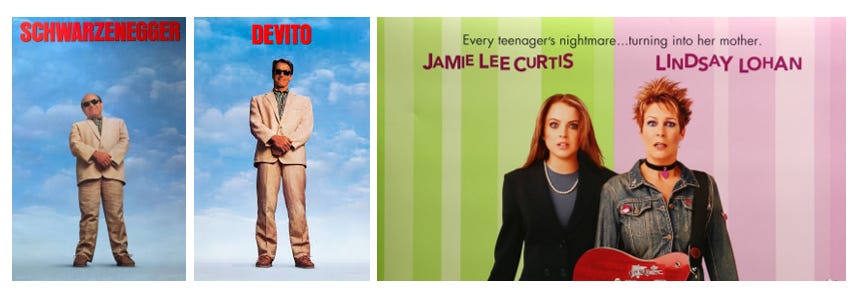
To be fair, sometimes it’s done for comic effect. The movie Twins has one-sheets with one of their actors standing below the name of the other. This was clearly playing on the premise of the movie. Another movie along those lines was the body-swap movie Freaky Friday, which could also claim some narrative reason for the incorrect attribution.
But those are rare, fun, fringe cases. In most situations there is no link to the movie’s plot and therefore seemingly no excuse.
How common is it?
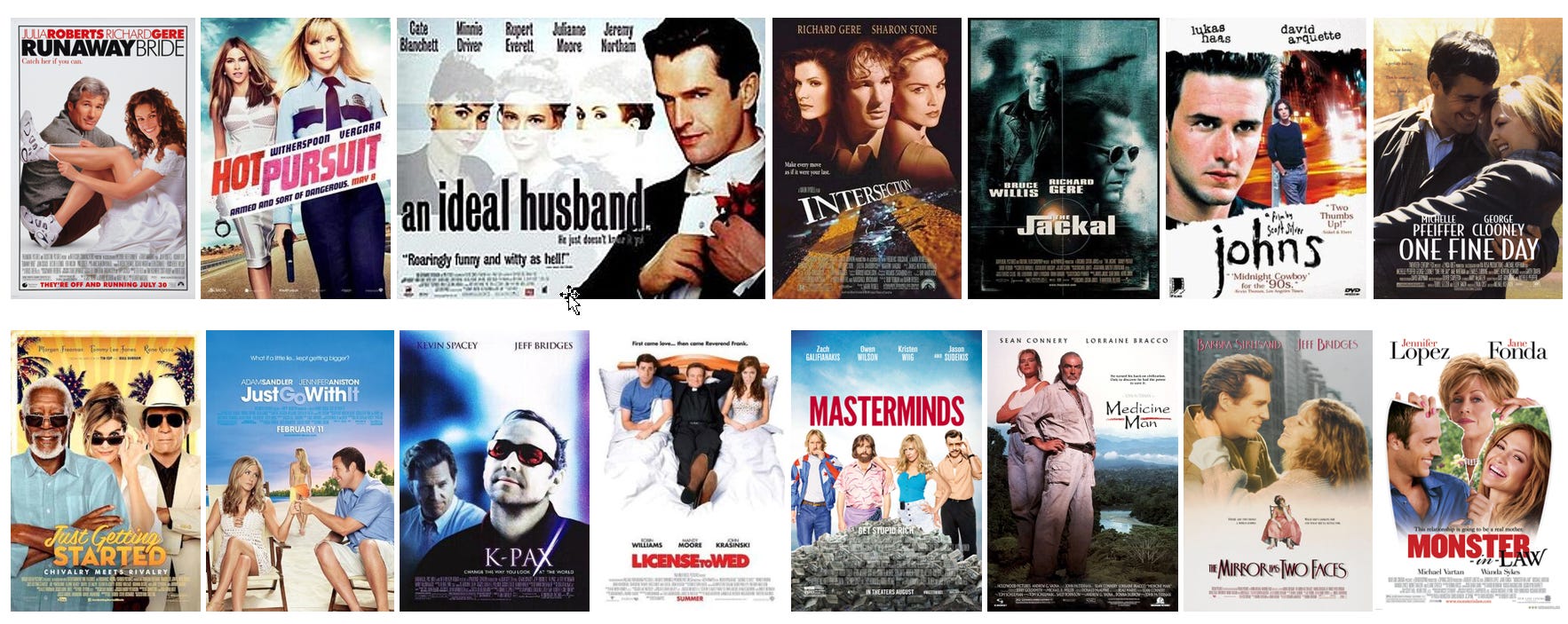
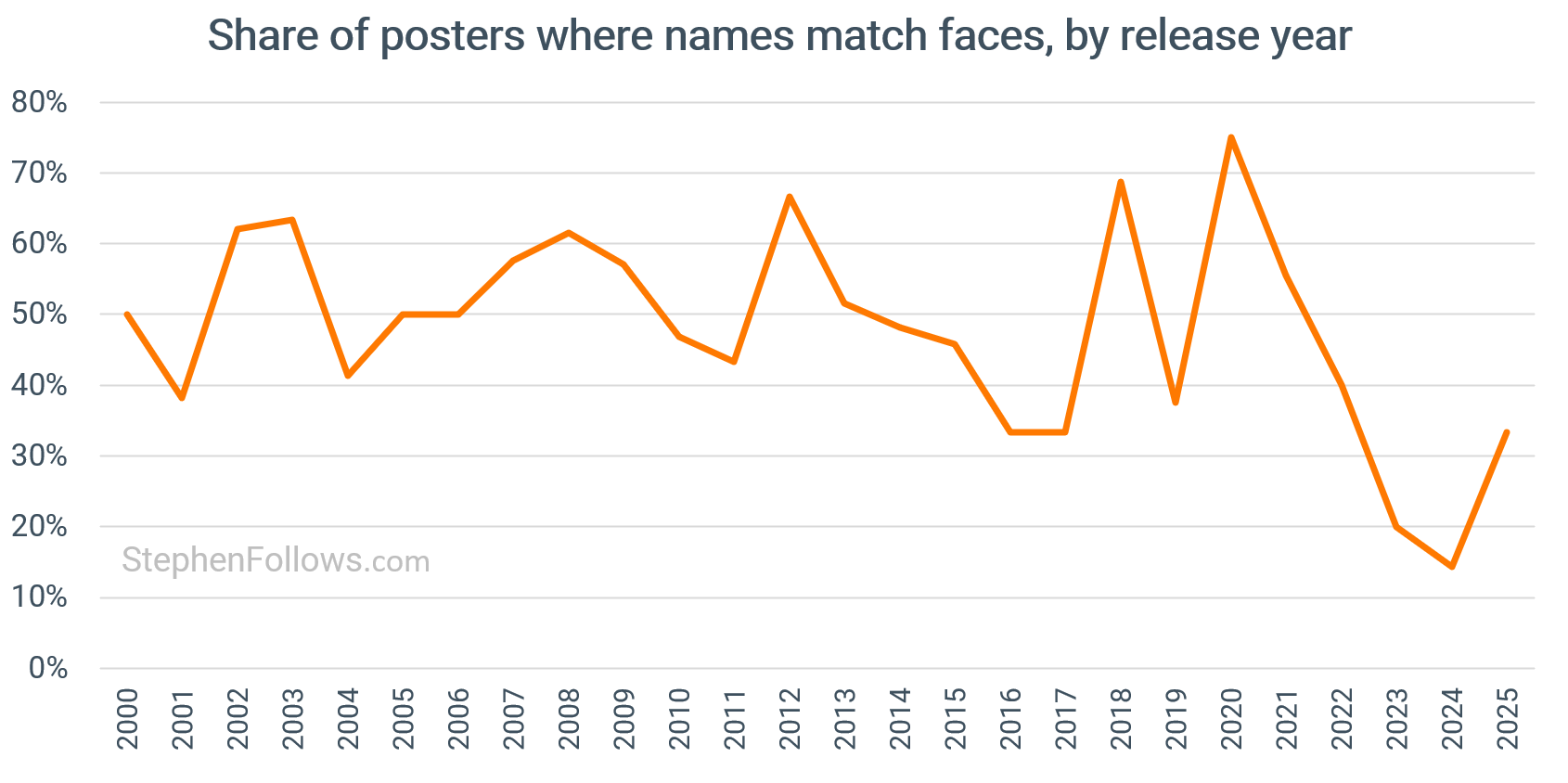
After going through over 4,000 posters, I can confirm that it happens about half the time. So close to half the time, in fact. 50.8% of the posters where there were both names and faces, placed them in a different order.
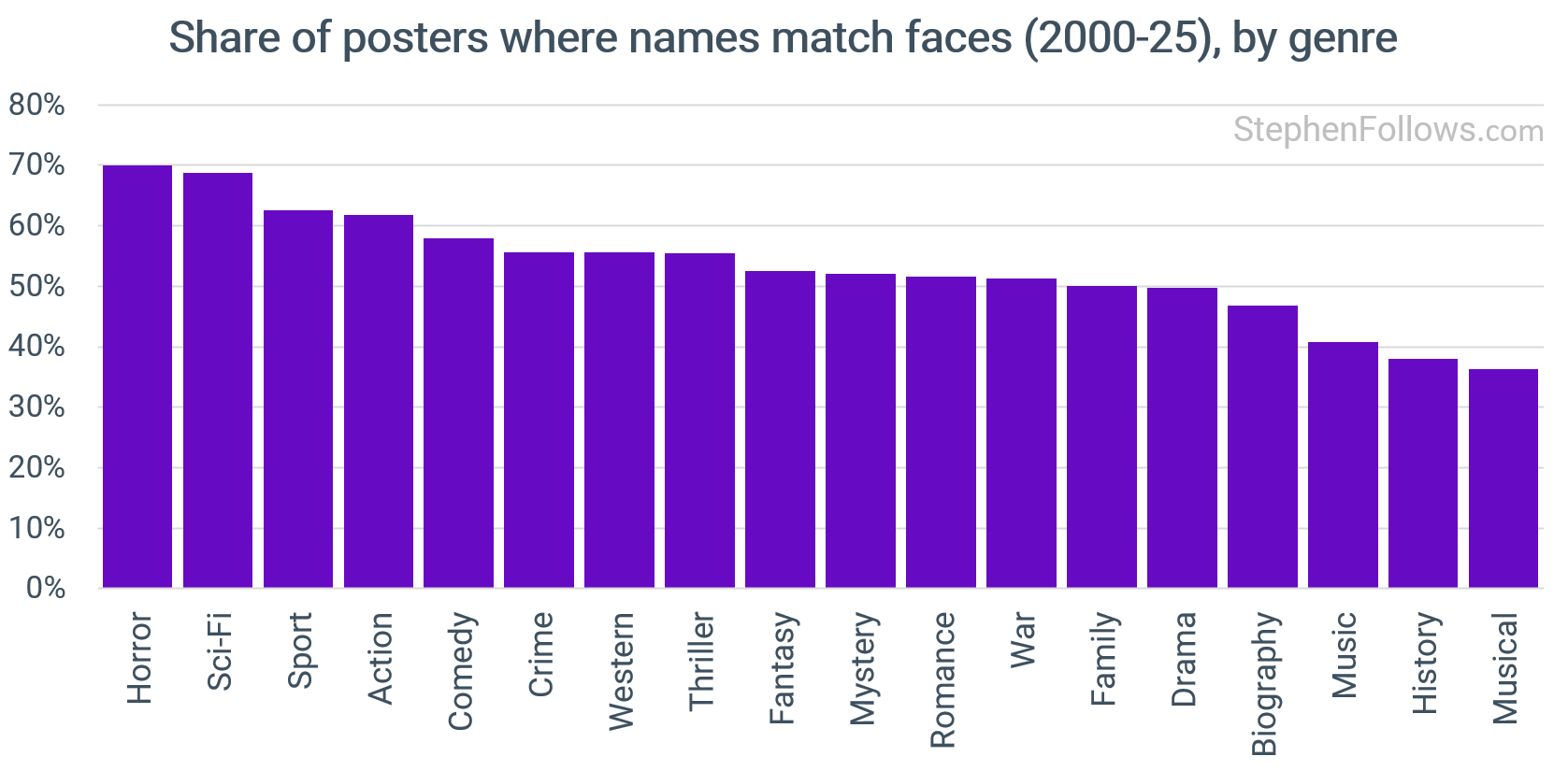
“Genre' movies” were the most likely to get the billing correct (70% of horror movies, and 69% of sci-fi), whereas musicals were the worst offenders (only 36% were correct).
This has been a fairly consistent trend over time, albeit with a bit of change in the last couple of years. Rather than this signifying a big shift, this is due to the style of poster falling out of fashion and therefore a smaller number of fringe cases skewing the data.
Why on earth is this happening?!
Given how commonly it happens, you won’t be surprised to hear that there a few key reasons behind it:
The order of names in text is contractual. Getting your named first (or at the very least ahead of that upstart co-star we’re worried will steal the limelight) is a top goal for any agent worth their salt. Contracts define the presence, size and location of a top actor’s billing on all marketing, especially the poster.
Marketers lead the design process. Unlike text, the placement of the photos are more about what will sell the movie best. They will want to create something that will grab people’s attention, quickly convey the plot / characters, and make people eager to see the movie.
The best billing in text is the left, but in the middle for images. The most bankable face is likely to be placed big and central, with the rest arranged on either side.
These few factors are enough to cause half of all posters to get the name / image match up “wrong”.
What happens when two actors demand top billing?
The billing will be a key part of the early contractual negotiations and offer, so in most cases it’s hashed out way before poster design starts. However, in a few notable cases producers have found themselves in a pickle with promises they’d made.
The Towering Inferno’s billing disagreement was settled by a slightly diagonal placement to the two lead stars’ images. It’s present on all the variations of the movie’s posters I could find (see below). Apparently this was enough to convince both Steve McQueen and Paul Newman that the other didn’t have better billing than them.

When securing Bette Midler and Shelley Long for the 1987 comedy Outrageous Fortune, the studio promised both actors top billing. In the end this was solved by splitting the US in two, with Midler getting top billing east of the Mississippi river, and Long to the west.
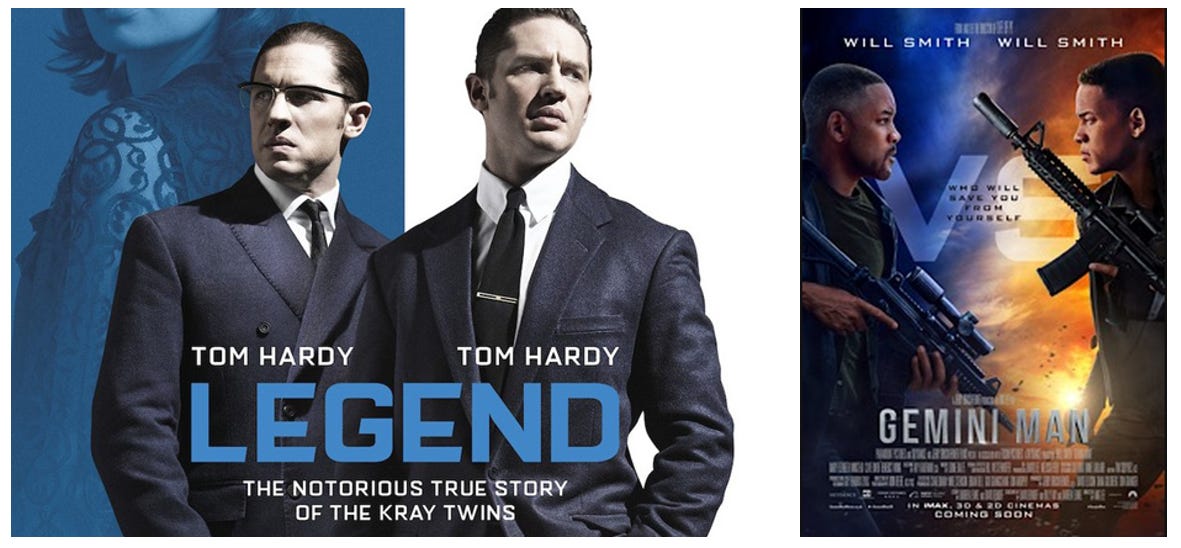
And finally, a quick shout out to the posters for Legend and Gemini Man which may or may not have got it right - I couldn’t tell.
Notes
I looked at all movies which grossed at least $1 at the US box office since 2000 for which Wikipedia had a poster image. I focused on posters that:
Display recognisable faces; and
List cast names in text (outside of the credit block).
I excluded those which placed faces (or names) vertically on top of each other as I want to look at the most obvious examples of “Are those names in the right order?!” question.
Epilogue
I often get asked if I use AI in my research. The answer is yes, a lot, but not in the way you might think. Today’s piece is a good case in point.
I did initially try to build a workflow which used a mix of image processing, OCR and AI to detect faces, recognise people from celebrity libraries, read the names and consider the two sets of name orders. But it fell at so many hurdles that it wasn’t viable for the time and resources I have to apply when looking to publish two new research articles each week.
But what AI was very useful for was writing the python code to make a lightweight tool which took in a list of posters and showed them to me one at a time. A quick key press logged how I categorised each image, meaning it took only a few seconds to either disregard or tag each poster.
So AI didn’t do the research nor write the article, but it was essential in this research being feasible. Interesting times we live in.
OK, I have wondered this for some time, and I still believe that the misplacing of names and faces is done on purpose to confuse the viewer, I guess there is a metric that says you will look at it longer, much like how uncanny valley works. You stop and stare and wonder what is happening. Long enough perhaps to scan the poster and the movie title sticks.
I’ve seen it so often, Im surprised it’s just 50%. I thought it was a weird convention.