


Ted Hope and Courtney Daniels have been collecting distribution case studies on FilmStack Daily Digest Substack for a while now. These are detailed, warts-and-all accounts from filmmakers about how they actually self-released their films.
Ted suggested I synthesise them into a series of meta-lessons that recur across the films.
You can read all of Ted’s collected case studies here Distribution Case Study Masterlist v1.0

The case studies span four decades, from Spike Lee’s She’s Gotta Have It in 1986 to Union in 2024. Budgets range from $2,000 to $2.5 million. The films include micro-budget narrative features, impact documentaries, festival darlings, and a few that no distributor would touch.
What follows are the nine patterns I kept seeing recurring in the firsthand accounts of filmmakers who went through it.
1. Build your audience before you need them
The single strongest predictor of distribution success across these case studies was whether the filmmakers had built a relationship with their audience before the release.
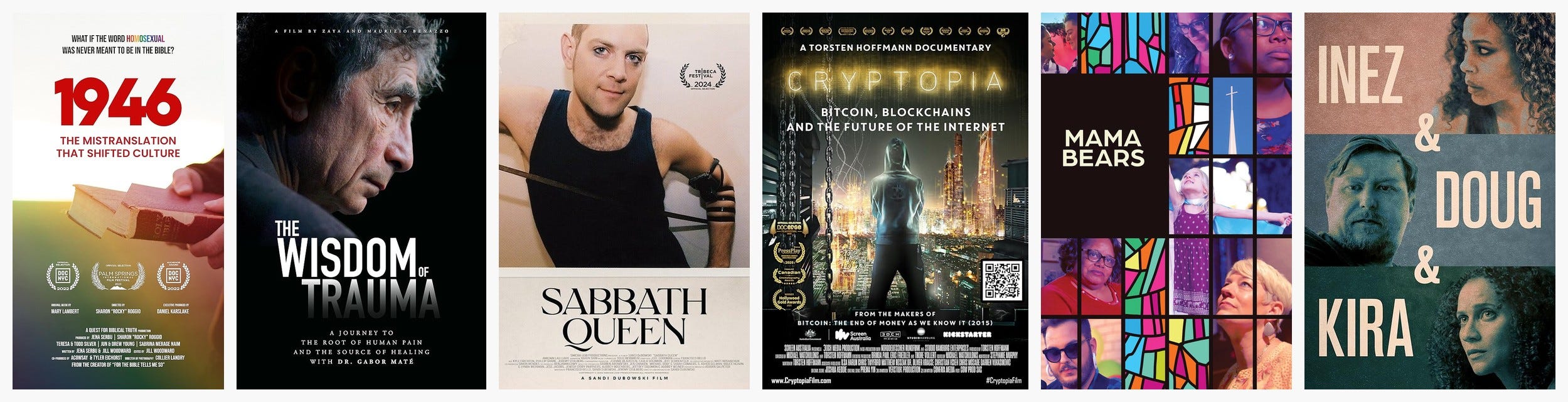
Sharon ‘Rocky’ Roggio made 1946: The Mistranslation That Shifted Culture, a documentary about a Bible translation that shifted attitudes towards homosexuality. Netflix passed, but rather than scramble for another platform, she built her own distribution model from scratch, starting while the film was still in production. She identified her core audiences (faith communities, LGBTQIA+ allies, scholars), ran Zoom focus groups, sent regular newsletter updates, and converted super-fans into volunteer ambassadors.
Don’t just make it available — make it matter.
Sharon ‘Rocky’ Roggio, director of 1946 (via Jon Reiss’s case study)
They had over 500 watch parties across 25 countries, net virtual screening revenue of $118,000, a TikTok following of 201,000+ and the whole time she retained all rights and viewer data.
The Wisdom of Trauma directors Zaya and Maurizio Benazzo distributed the film exclusively through their own website, using Vimeo. They grew their email list from 60,000 to 900,000 subscribers during the campaign. Four million views in the first seven days. First-week revenues exceeded the entire film budget and fully financed their next project. Crucially, 50–60% of views came from word-of-mouth, not paid advertising.
Sandi DuBowski, director of Sabbath Queen, has been collecting email addresses at screenings with physical clipboards since releasing Trembling Before G-d in 2001. Twenty-four years of audience data, one clipboard at a time.
Cryptopia director Torsten Hoffmann, whose Kickstarter campaign reached its goal in nine days, found that 70% of funds raised came via email. His was:
The modern filmmaker is more of an entrepreneur who has to create a “product” for a “market”. Audience building and branding are part of this process.
Torsten Hoffmann, director of Cryptopia (via The Film Collaborative case study)
There were also some examples of filmmakers who didn’t do this and later regretted it. Daresha Kyi, director of Mama Bears, reflected that she ‘should have collected audience emails more systematically’.
Julia Kots of Inez & Doug & Kira found that without a pre-existing audience or clear niche, options narrowed fast.
In short, if you haven’t started building your audience by the time you lock picture, you’re already behind.
2. Reject inadequate deals - self-distribution can outperform
Across these case studies, filmmakers who rejected disappointing traditional distribution offers and chose to self-distribute frequently outperformed what they would have earned through conventional deals.
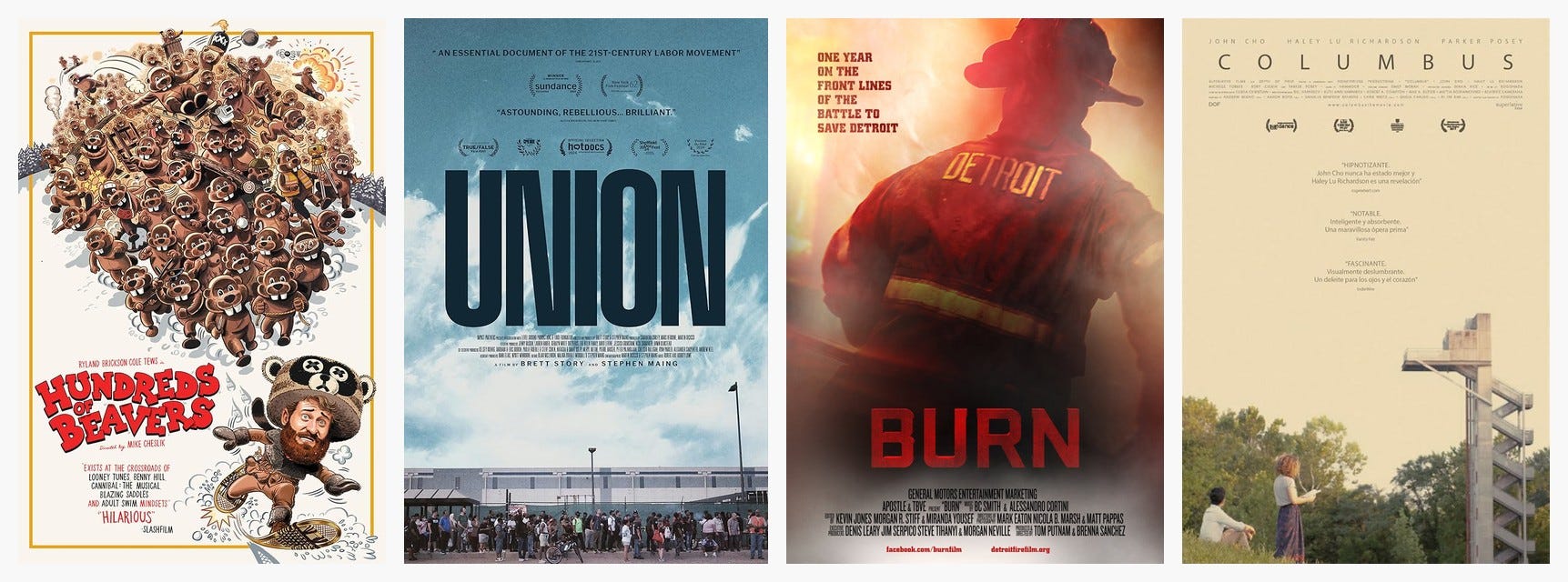
Hundreds of Beavers is the standout. Traditional distributors offered maximum guarantees of $30,000 for a film that cost $150,000 to make. The filmmakers refused and pursued what they called ‘hybrid self-distribution’, splitting rights across theatrical, TVOD, international, and physical media.
Hundreds of Beavers:
Budget $150,000
Total revenue ~$800,000 (as of October 2024).
Distribution cost ~$135,000
Plus an estimated $150,000–$250,000 of unpaid social media labour.
Had they accepted the $30,000 offer, they would have earned roughly 4% of what they ultimately made.
(In the UK, they partnered with agency Times One Hundred, which has a case study on its site about the UK release).
Union premiered at Sundance, won a jury award, appeared on multiple ‘Top 10 Films of the Year’ lists, and screened in 23 countries. Yet every major distributor passed, and the producers chose to self-distribute.
Distribution is part of making a film and needs to be just as strategic, creative, and contextual to your film as its team, artistic vision, and style.
Samantha Curley, producer of Union (via Distribution Advocates case study)
Their Black Friday TVOD launch through GATHR (a five-day window with the tagline ‘This Black Friday, don’t order from Amazon. Watch UNION’) generated 2,000 rentals and netted as much revenue as the ‘entire theatrical run’ with, as they put it, ‘way less money, time, and resources’.
Burn provides the founding text for this model. After winning the Audience Award at Tribeca in 2012, the best offer was ‘low-ball offers, in the mid five-figure range’. Co-director Brenna Sanchez’s response:
Don’t believe someone else can do it better than you can. And certainly don’t wait for them to do it. Be nimble.
Brenna Sanchez, co-director of Burn (via Film Independent case study)
They four-walled theatres across America. The 25-city northeast tour alone grossed $375,000 and eventually played in 170+ cities. Tom Putnam’s advice:
‘Plan on releasing the movie yourself as part of budgeting; look at distributor pickup as happy accident if deal makes sense.’
Columbus faced the same dilemma. Despite Kogonada’s feature debut receiving ‘exemplary reviews’ at Sundance with John Cho and Haley Lu Richardson, the best all-rights offer was $150,000 against a $700,000 budget. A $550,000 shortfall. They chose creative distribution instead.
None of this is to say that self-distribution always wins. But the default assumption (i.e. that a traditional distributor will do better) is, based on these case studies, increasingly unreliable. Particularly for documentaries and films without a recognisable cast.
3. Eventize every screening
If there’s one tactical recommendation that appears more consistently than any other across these case studies, it’s this: don’t just show your film. Make every screening an event.
Yes, I hate the word ‘eventize’ too. But the concept behind it is the closest thing these case studies have to a universal principle.

Sabbath Queen’s Sandi DuBowski pursued a year-long eventized theatrical model. Nearly every screening was transformed into what he described as a package:
‘It was like a package experience. Oh, the Sabbath Queen Cruise is coming to town — you see the film, then you have a ritual feast, then a deeper discussion.’
Sandi DuBowski, director of Sabbath Queen (via Jon Reiss’s case study)
His screenings included partnerships with houses of worship, restaurant-hosted Shabbat dinners, and ‘Soul Spa’ events. Box office: over $110,000.
Hundreds of Beavers took a different approach: mascots, wrestling, merchandise, and a fur red carpet at the LA premiere, which generated coverage in Variety. They staged a 14-city Midwest road show with Q&As. The events were fun but also provided footage that could be repurposed as paid advertising content.
Eno, Gary Hustwit’s generative documentary about Brian Eno, pushed the concept furthest. Custom software creates a unique version of the film for every screening, so each showing is genuinely unrepeatable. Premium event screenings (where Hustwit performed the film ‘live’ on stage) commanded $25-$40 tickets, with 100% of the proceeds retained by the filmmaker.
There is a reporting issue here that I found particularly interesting (I know that, as a data nerd, numbers will always jump out at me, but in this case, I think it’s worth noting for everyone). Eno’s total theatrical gross was over $1 million. But the standard box-office reporting showed only $298,989. The remaining $400,000+ came from event screenings and partnerships that trades don’t count. The gap between reported and actual revenue was enormous, and invisible to anyone reading the trade press.
It makes you wonder what else we’re missing.
The Twin Seas Media case studies demonstrate this model at scale for impact documentaries. In the Whale reached 10,000+ viewers across 72 screening partners in 13 states over 12 months, with ‘sold-out screenings and encore requests’ described as ‘frequent occurrences’. A Reckoning in Boston reached 10,000+ people through 65+ partners across 28 states, generating $100,000 in licensing and speaking fees. Same model every time: screening + Q&A + community conversation + local partner.
Even at the micro level, Guacamole Yesterdays organised a multi-city tour pairing screenings with Q&A sessions and community events. They eventually secured placement for Apple TV pre-orders while retaining control over pricing and audience engagement.
Overall, it seemed to me that a screening people attend generates more revenue, more word-of-mouth, and more downstream value than a screening they merely watch.
4. Constraints are creative fuel, not limitations
We should acknowledge at this point that with any list of micro-budge case studies, there is survivorship bias. By their very nature these are the success stories, and for every Clerks there are hundreds of micro-budget films nobody ever heard of.
The case studies are only of films that beat the odds. But what’s interesting is how they beat the odds. In almost every case, the budget constraints produced a visual identity that audiences celebrated rather than forgave.

