


Some films make strong returns even when critics give them a kicking.
I identified 186 movies which made at least a 200% in profit, despite receiving very poor reviews from critics.
These breakout successes fall into five clear categories:
Genre movies which really deliver. Films that stick tightly to genre conventions and satisfy core genre fans.
Famous brands or stars. Films where well-known franchises or celebrity names pull in audiences.
Films for underserved or mobilised audiences. Movies made for specific groups who rarely see themselves on screen, like faith-based or LGBTQ+ audiences.
Shocking and controversial films for the curious. Titles that use notoriety, controversy or shock value to drive curiosity and word of mouth.
Feel-good, lowbrow escapism. Simple, broad comedies and romances made for those wanting easy, light entertainment.
I’m going to look at each group in turn and then draw some wider lessons that producers and filmmakers can learn from the patterns.
1. Genre movies which really deliver
The first group is made up of films that stick closely to genre expectations, delivering an undiluted dose of what genre fans crave.
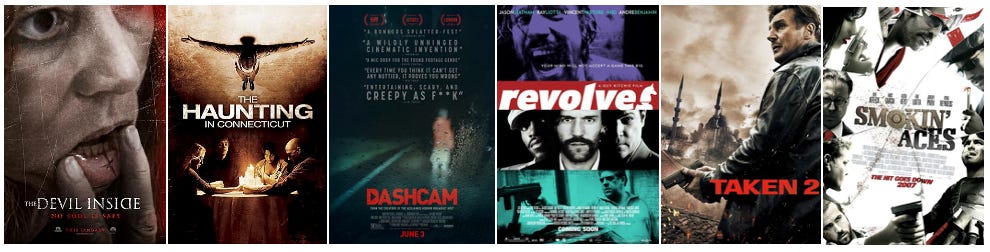
This cohort has a lot of low budget horror movies, including Saw, Paranormal Activity 4, The Purge: Anarchy, Dashcam and Annabelle. It’s not a surprise that horror title over-index here as critics don’t traditionally like them, and because horror is a genre which thrives on low budgets.
Writing in Variety, Dennis Harvey called Saw “A crude concoction sewn together from the severed parts of prior horror/serial killer pics”.
In the same review he called the movie “convoluted”, “desperate”, “wholly derivative”, “shamelessness”, “unoriginal”, and stated that “building atmosphere and suspense is well beyond [the filmmakers]. Ditto handling actors”
Another popular genre are the action-thrillers. They tend to be written off as “dumb” by critics but attract thrill-seeking audiences around the world. Examples include Taken 2, Revolver and Smokin’ Aces.
But it’s not all blood, guts and guns. Broad comedies show up (Ride Along, Next Friday) as do music-based films (Step Up, Stomp the Yard), both categories in which the primary audience is clear.
The overall message with this group is not about any particular genre but more that movies don’t need glowing reviews if they can really deliver a familiar ride which audiences crave.
2. Famous brands or stars
The second group covers films that draw a crowd because of their connection to an established brand or a recognisable star.
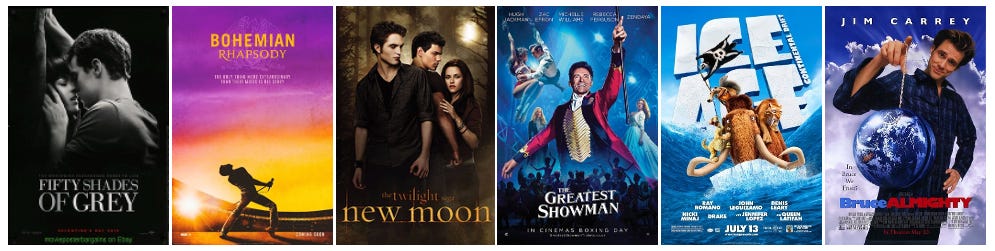
This includes sequels, adaptations, spin-offs and movies built around major pop culture figures. The marketing does not need to work very hard to explain what you’re getting as audiences already know from the title or the poster.
Book adaptations like Fifty Shades of Grey, blockbuster sequels such as The Twilight Saga: New Moon, and star-driven vehicles such as Bohemian Rhapsody and The Greatest Showman, both of which used the fame of the central act or performer to fill seats regardless of critical reaction.
Mick Lasalle, San Francisco Chronicle said of The Twilight Saga: New Moon “Expect this film to satisfy its fans. Everybody else, get ready for a bizarre soap opera/pageant, consisting of a succession of static scenes with characters loping into the frame to announce exactly what they're thinking."
Family franchises perform strongly here too. Ice Age: Dawn of the Dinosaurs, Ice Age: Continental Drift and Night at the Museum all used audience familiarity and loyalty to ensure a solid box office even as the reviews dipped.
The main point with this group is that brand recognition or famous names trump everything else. If people already feel connected to the property or talent, they are very likely to show up, no matter what critics say.
3. Films for underserved or mobilised audiences
The third group includes films that target audiences who rarely see themselves reflected in mainstream cinema.

Rather than chase general approval, these movies speak directly to faith-based communities, certain subcultures, or niche groups that will rally behind a film when it speaks their language.
