


Recently I have been conducting more projects looking at the financial performance of movies. You’ll already have seen a few articles on the blog, with more to come soon. Today i wanted to address something which occured to me as I pored over the spreadsheets.
Namely, that there are some genres are best suited to smaller budgets and are rarely improved by scale.
I looked at the financial and critical performance of over 10,000 movies over the past half century to understand which types of movies both thrive on lower budgets, AND seem to struggle when more money is spent.
The four types which jumped out to me were:
Offbeat character comedy feature distinct voices and quirks but suffer of forced to soften or broaden their appeal.
Brainy science fiction uses tight resources to focus on clever concepts and bold ideas, leading to the intimacy and inventiveness that the audience crave.
Terrifying horror relies on the limitations low budgets forces upon filmmakers.
Intimate drama and romance find their strength in stripped-down settings and grounded performances.
Let’s look at each in turn and then draw wider lessons from the journey.
1. Offbeat character comedy
Offbeat comedy thrives on intimacy, specificity, and (perhaps seemingly ironically) a sense of realism.

The jokes that land hardest are usually rooted in idiosyncratic characters or sharply observed detail, both of which risk dilution with a bigger budget or star-heavy ensemble.
The more contained and peculiar the premise, the more a modest production value supports the comedy’s tone. In short, these films succeed when they resist the urge to broaden their appeal or add unnecessary gloss.
Because they don’t have to justify a big budget to investors, the filmmakers have less pressure to attract a mainstream audience. This frees them up to shoot for riskier, more personal humour, and let their artistic voice run riot.
Offbeat character comedy has proven itself at both micro and lower budgets. Napoleon Dynamite (reported budget of $400k) Clerks ($27k) both brokeout and launched careers. The approach works just as well at a slightly larger scale: The Big Sick ($5m) grossed over $56 million globally, and Booksmart (budgeted at $6m, grossed $25m worldwide), and a few years ago Palm Springs (shot for $5m) became one of Sundance’s prized acquisitions for a reported $22m.
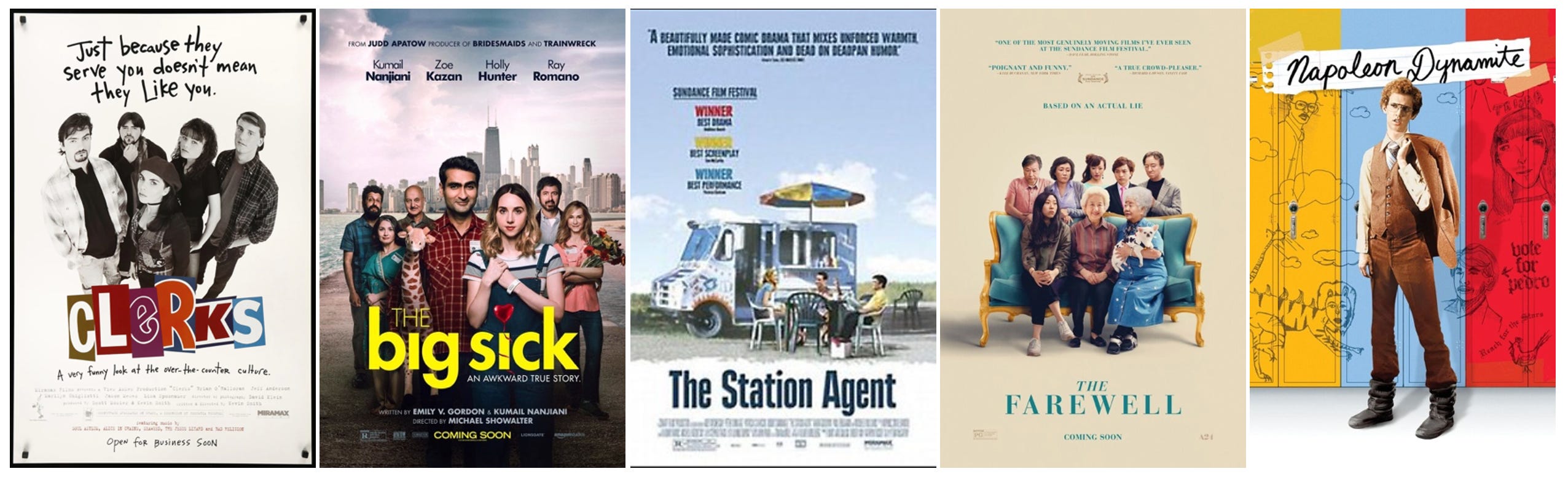
Attempts to upscale these comedies often flatten what made them appealing. Studio-backed character comedies force in bigger effects, expensive locations, and cameos, but these elements rarely serve the core material. The sense of reality and the oddball social dynamics disappear in favour of production design and set-pieces.
When Hollywood spent big on comedies like Son of the Mask or The Adventures of Pluto Nash, the creative identity vanished and audiences stayed away.
Offbeat character comedies solve their biggest creative problem not with money, but with the freedom to stay strange. The lower the risk, the more producers and writers can let unusual voices and perspectives come through.
2. Brainy science fiction
Brainy science fiction is all about resourcefulness and intriguing concepts. Unlike effects-driven blockbusters, these films attract audiences who value ideas and narrative complexity above large-scale spectacle.
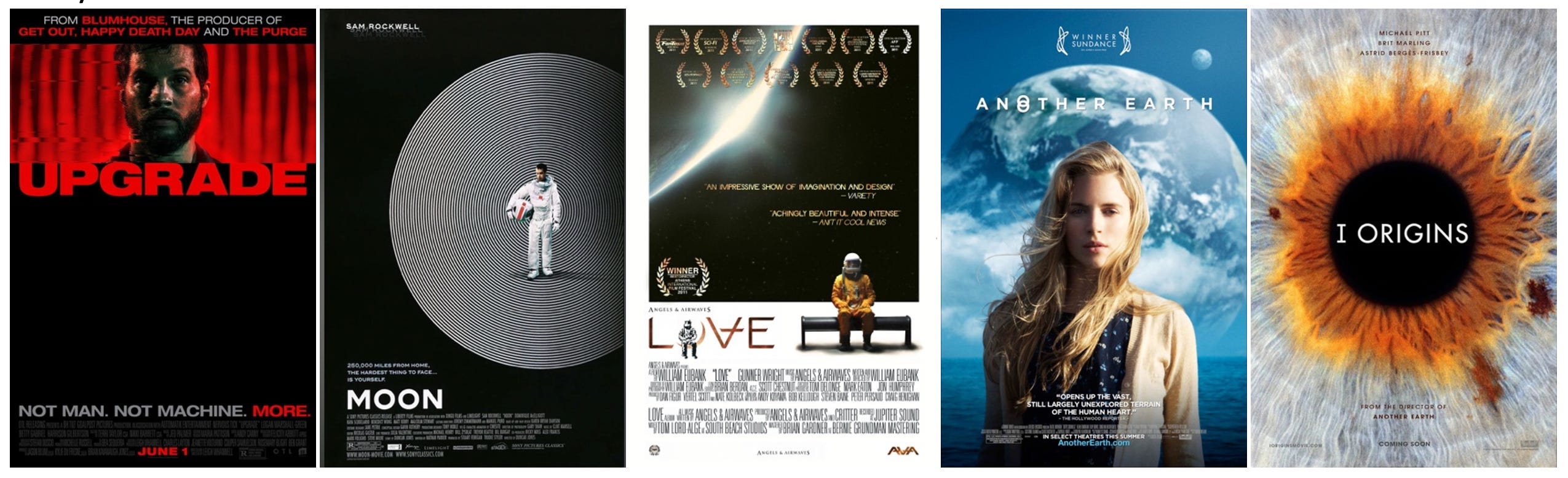
The smaller the budget, the more directors focus on contained settings, minimal casts, and clever writing to deliver their story. This approach often heightens the sense of possibility and makes even the most outlandish concepts feel credible.
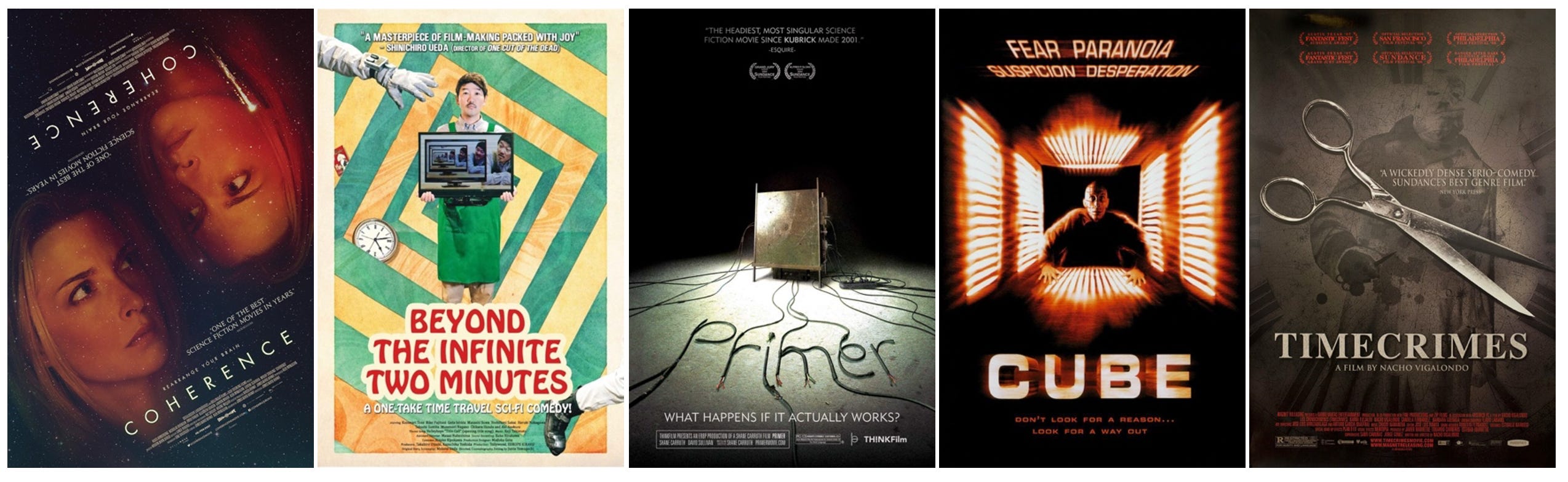
Films like Primer ($7k), Coherence ($50k), and Moon ($5m) highlight why this works. With few locations and a focus on characters, they achieved cult status and critical acclaim despite minimal spending. District 9, while larger at $30m, still counts as modest for its genre and used its budget to create gritty realism and political allegory, showing that a strong concept can stretch every production penny.
Bigger budgets don’t necessarily help upscale brainy science fiction. Cloud Atlas and Annihilation struggled to recoup their investment despite ambitious scope and visual effects. Blade Runner 2049, though respected by critics, failed to match its towering budget with box office receipts.
