


The average film crew will contain a wide variety of people and span a huge number of skillsets. It could include chefs and chauffeurs, grips and greensmen, producers and publicists, make-up artists and motion control technicians, and many more.
They work together on the film, often side-by-side on-set, but each person has their own career journey. Hiring practices can differ wildly between departments, as can their likelihood of building a sustainable career in film.
In the past I have looked at the crossover between certain film jobs, so today I want to look at the inverse - which roles are most often siloed? By 'siloed', I mean that all their film credits are within one department, even if they move up the ranks from junior to senior roles.
To answer this question, I looked at the movie careers of 507,516 people who had at least one crew credit on a movie released in US cinemas between 2000 and 2019. There is more detail on my criteria and methodology at the end of the article.
Let's start by looking at the different departments and then move on to individual creative roles.
Isolated departments
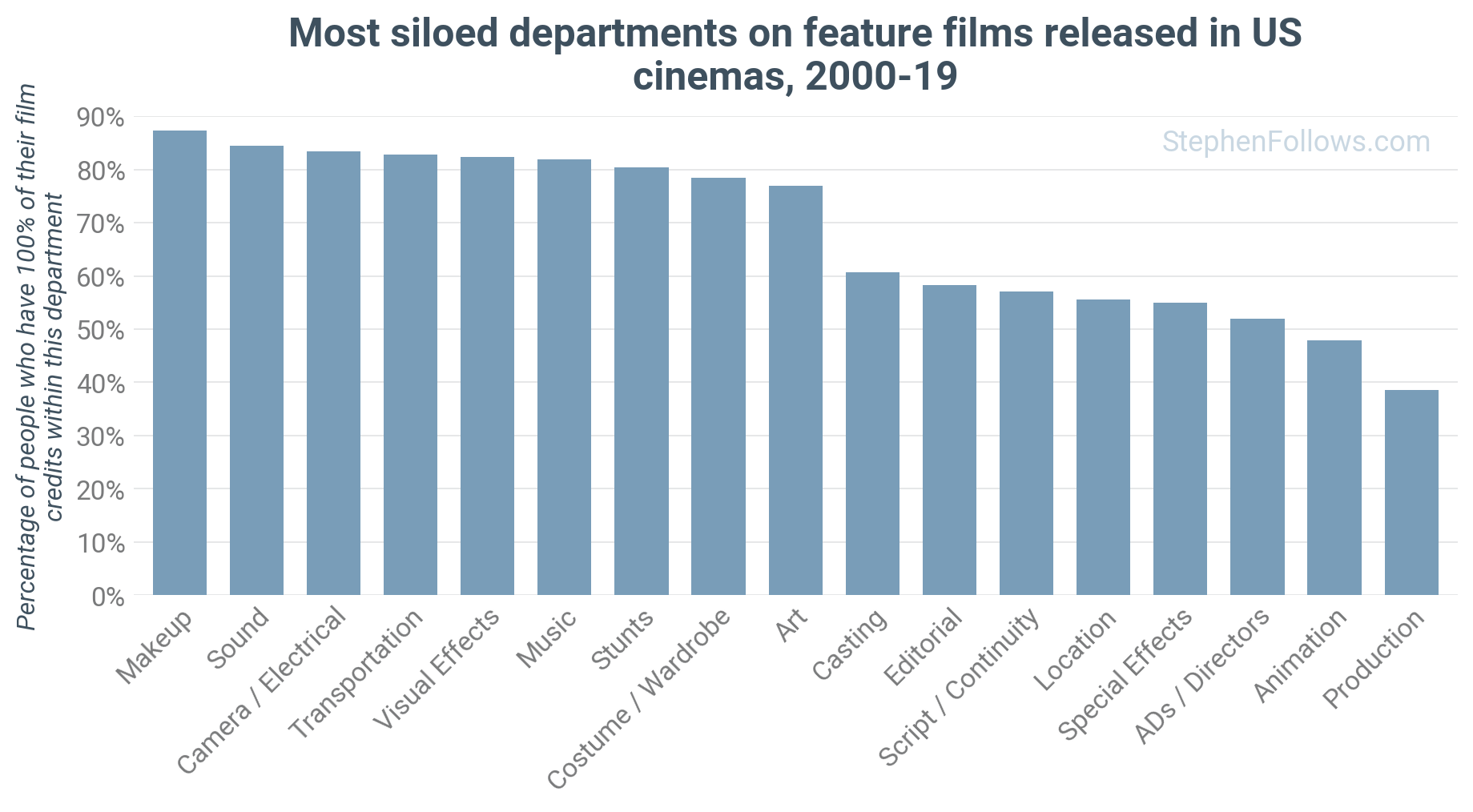
For each of the half-million people I researched, I noted whether or not all of their credits were within one department. This allowed me to track what percentage of people within any given department had spent their film careers since 2000 in just that department.
87% of the people who have received a film credit in Make-up related jobs since 2000 have not worked in another film department in that time. Followed close behind by those working in Sound (84%), Camera (83%) and Transportation (83%) departments.
At the other end of the spectrum, the Production department has the lowest silo rate, with just 39% of people working exclusively within Production across their film careers.
Siloed creatives
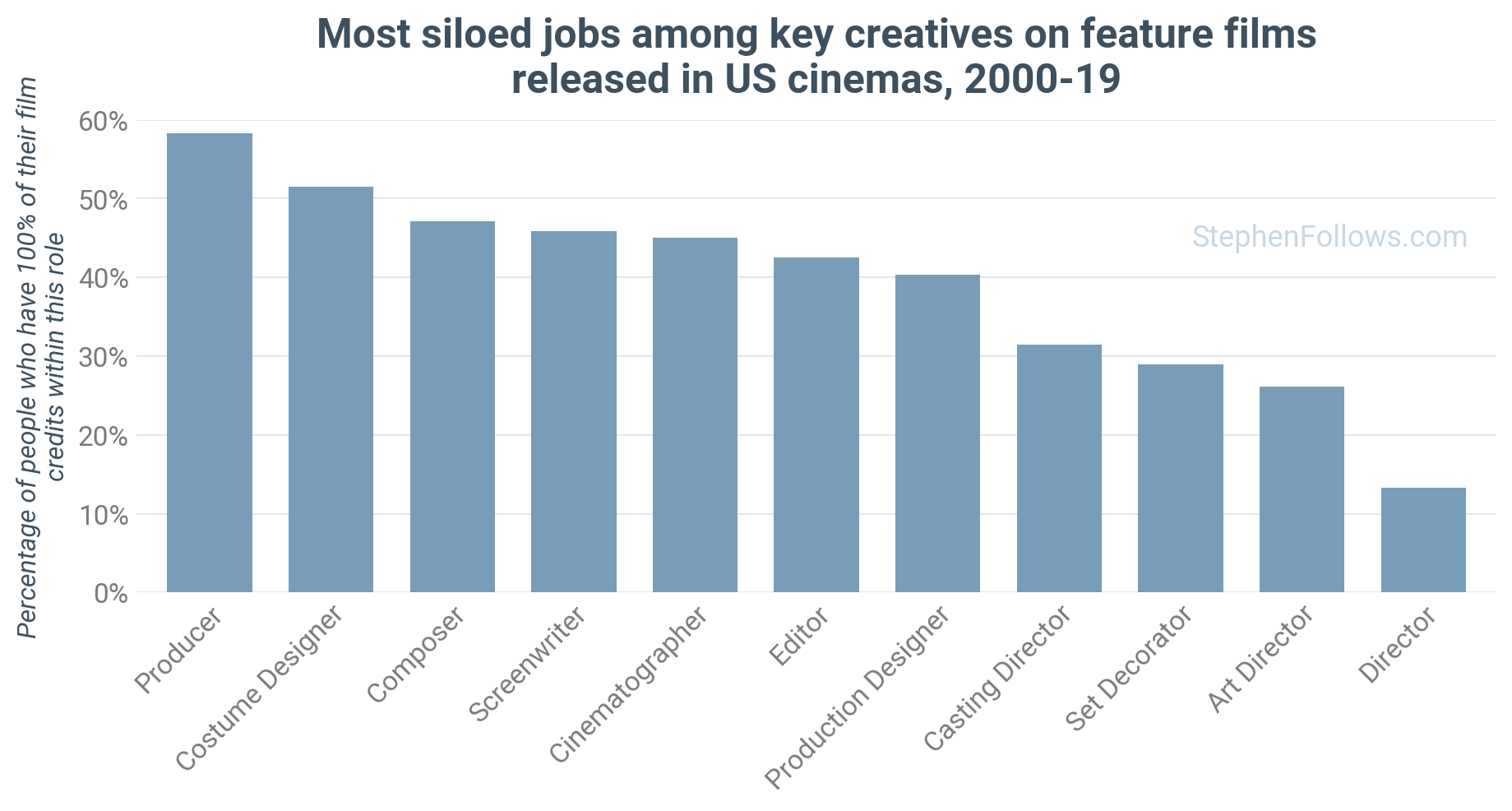
Moving on to the key creative roles, we see an interesting flip, in which Producers are the least likely to be credited in other creative roles. 58% of Producers have had no film credit in another role since 2000. Similarly siloed creative jobs include Costume Designer (52%), Composer (47%) and Screenwriters (46%).
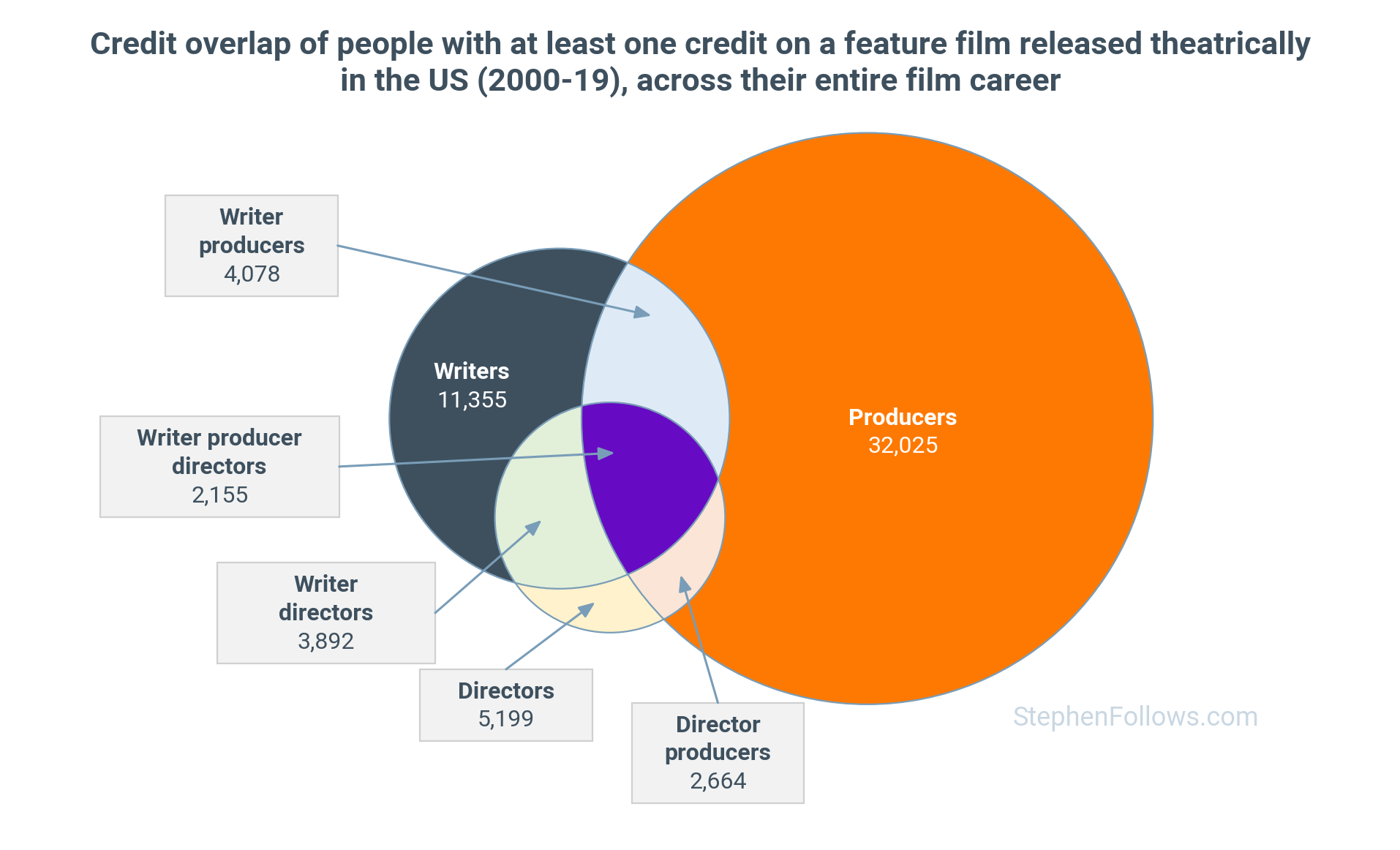
Only 13% of Directors have worked exclusively as a director since 2000. Put another way, almost nine out of every ten directors have worked in another key creative role on a movie.
This is borne out in previous research I carried out into the overlap of key roles. You can read the full piece here but I thought it would be useful to include the Venn diagram below, highlighting the extent to which directors frequently also take on the roles of Screenwriter and Producer.
Notes
Today’s research looks at the movie credits of people who had at least one crew credit in a movie released theatrically in North America between 1 January 2000 and 31 December 2019. Once I had my list of people, I looked at all their movie credits released from 2000 onwards, so anything they worked on before 2000 is not counted.
Raw credit data came from a number of public sources, including IMDb, Wikipedia and Movie Insider. This does not take into account work in other mediums, such as TV, music videos, online videos, etc. This research treats all credits the same as it cannot take account of the length of time worked, seniority, the amount paid, etc. Given the unbalanced nature of the industry, it’s certainly possible to be successful in ways that do not show up in simple credit counts. These include being the writer of unproduced (but optioned) scripts, being hired infrequently but paid handsomely, uncredited work, etc.