


As another year’s European Film Market winds down, I have completed my annual round-up of what I saw, heard, and read.
A major reason I attend these events is to listen to what people talk about, what they ignore, and how they frame the industry. The key things I picked up this year were:
Risk mitigation has become the industry’s default setting
The market keeps getting shorter
AI is fully embedded in the market (but not in people’s hearts)
The movies were less stary-y and more art-y
Stars tried to be apolitical at the most political of festivals
Russia’s changing role (again)
TIFF’s market steps into the limelight
Mad festival stuff
Before we get into the serious topics, I thought I’d open with something lighter. Long-time readers will know of my ever-growing list of ‘mad things I’ve genuinely overheard at film festivals’. This year’s EFM gave us these beauties to add to the list:
“The only studio contact I have is my dealer. They supply some execs”.
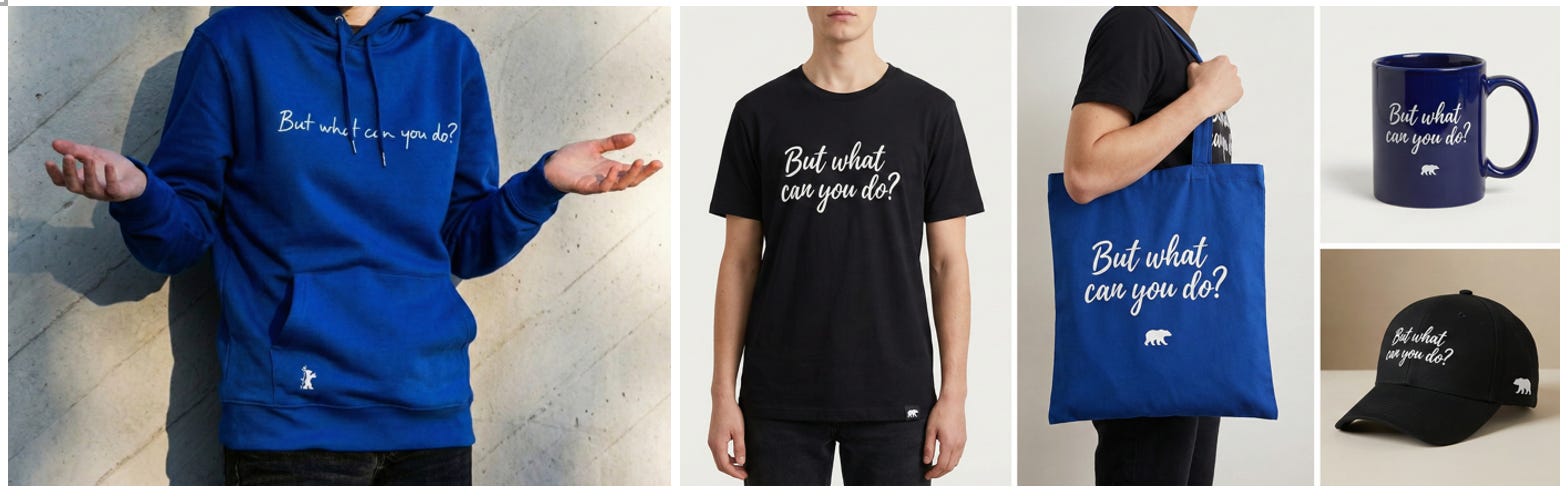
Response: “Do you think we can get them to read the script?”On three separate occasions, I heard the phrase “Nothing good happens at a film festival”. I’m thinking of putting on a t-shirt. Or better still, I could follow the Berlinale‘s approach and put it on a hoodie for €53.
“It’s written by two women, so you know it’s safe from that point of view” (This was a meeting of four men in preppy sweaters and chinos).
A guy who was being asked a series of very valid questions about his project, to which he replied to all with “I wish I knew” in a tone that implied he thought that was a full, satisfying answer. He was just so keen to be funded and find out the answers to these great questions.
“We’ve got a lot of women in peril films” Looking at the producers in question, it’s worryingly unclear if they were talking about on or off screen.
Ok, that’s enough for that. Let’s look at each of the key things I noticed in detail.
1. Risk mitigation has become the industry’s default setting
My main takeaway from this year was risk mitigation. A lot of what was being said was rooted in actions people were taking in response to perceived risks.
That shows up first in how organisations position themselves. The EFM’s 2026 messaging leaned into “new strategic partnerships” and “cross-sector collaboration” to address an industry that feels more fragile and interdependent than it did a few years ago.
I heard this a lot, with increased chatter around bridge-building between festivals, markets, funding bodies and companies, because access, leverage and exposure feel harder to control than they used to.
It also shows up in deal structure and rights thinking. The Ryan Coogler “Sinners” deal became a reference point in conversations about ownership, reversion and long-tail value. Not because everyone can get those terms, but because it puts “who ends up owning this in 10–25 years?” back into the mainstream bargaining vocabulary.
Finally, it shows up in how projects are financed and protected. Tax credits and incentive regimes remain the most relied-upon form of risk reduction, and jurisdictions keep tweaking them because production is mobile and capital is cautious. In practice, this pushes producers towards structures that can be collateralised and audited, and away from anything that relies on optimism.
An adjacent neighbour of this was the sharp rise in casual nihilism. It seemed that at every turn and in every conversation, there was a weary acknowledgement that everything is kinda broken, but that we should keep showing up to meetings nonetheless. “But what can you do…?’ was how most conversations resolved.
Maybe THIS should be my hoodie slogan?
2. The market keeps getting shorter
The very first edition of Screen’s dailies (published on Thursday) said:
Today may be the first official day of the EFM, but many sales executives have been in town since Monday… Some buyers are planning to leave Berlin by the weekend.
This matches what I saw on the ground, namely concentrated early meetings, tighter schedules, and less mid-week drift. This is not necessarily a bad thing, nor does it denote a weak marketplace (in last week’s piece, I showed how attendance is still growing year on year).
This change is down to an efficiency drive. The time-consuming bits can be handled via email, Zoom, and screeners, leaving just the human interaction for in-person. Plus, we’re seeing the continued deprioritisation of the party/social side, as seen more often in Cannes and pre-pandemic Berlin.

Markets are no longer assumed to require full-time in-person attendance, as deals can continue remotely, meaning the all-important in-person window can be compressed.
3. AI is fully embedded in the market (but not in people’s hearts)
As you might expect, AI was ever-present, making its way into workshops, ways of working, and real projects on sale in the market.
Events. Among the EFM 2026 events focused on AI integration were:
“From Hype to Help: Real-World AI Use Cases Worth Your Time”
“Pitch Perfect: Producers Showcase Projects Analysed by AI” (Yes, the era of AI focus group approaches).
Not all were presenting a positive framing of AI (another way of putting that is… not all were paid for by companies that sell AI products), such as “Rethinking Producing Through Collective Power to Sharper decision-making in the AI era”
Expectations. Across the board, AI is framed as part of how films get financed and packaged, rather than as some speculative future topic. More than a few filmmakers I spoke to said they were being expected to bring AI-generated videos to pitch meetings, even for non-genre projects. This mirrors a survey released this weekend that found that half of the 254 professional Indian screenwriters surveyed said “producers now expect faster turnaround times because they assume writers will use AI”.
Exploitation. On the sales side, a number of AI-led projects were on show:
Odin’s Eye Entertainment offered an AI-generated documentary Post Truth for international sales.
The Hybrid Creators pitched RebelDogs featuring “hybrid actors” that buyers could overlay with local celebrity faces using AI.
As well as possibly the first AI-generated film to qualify for the Oscars, The Great Reset was being sold at EFM.
